You're watching Open Agenda. Here's our
host, Joe White.
>> Welcome to Open Agenda. I'm your host,
Joe White. So, it is the end of August
or the second half and school is about
to start. U Dr. Venosa's got class
coming up soon. Uh so, we want to talk a
little bit about education. In the
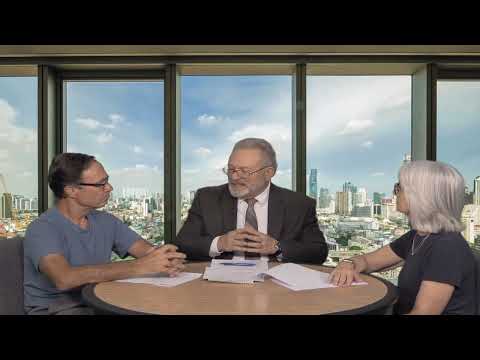
studio with me right now is Mr. Jim
Atkins and the affforementioned Dr.
Venosa. Thank you.
>> Thank you.
>> So, uh gentlemen, I want to bring in
Bonnie Inis. She's uh she's district 5
or she's the at large for at large for
now. Yeah.
>> Yeah. For um uh the board of education
and I want to ask her about some of the
challenges uh also the you know they
were funded above maintenance of effort
this year that was a permanent funding.
>> So and ask her just really how that
works because I'm sure for a lot of
folks out there that's maybe
>> people still don't really know. Yeah.
>> Yeah. And Jim, you and I attended the
county council meeting today and um they
had a quarterly session with the board
of education. Uh we weren't we weren't
there for that part, but uh
>> we did we did see, you know, the the
meet with the the folks from the
Watchman Group and the NAACP following
up on the lawsuit that has led to us
having seven elected officials, seven
elected districts in the next election.
>> You said that the legal department is
working on that. Do they have a timeline
as to um when they're going to because
we're in the eighth month now of the
year that they can let us know as to um
that is created and
>> Mr. Wilbur Mr. Wilbur, if you could if
you could come to the podium or you
could have come to the chair if you want
to address it.
>> Uh to answer your question, the uh uh
human rights advisory committee uh that
should come forward as a resolution to
the council within the next month.
And as far as the antibbias training,
uh we had I had talked with the JET
about that back in April.
uh uh ACLU had requested copy of written
materials that would be the subject of
the antibbias training
>> and I requested that in May and again in
July and haven't received it. So that's
where that stands.
>> You requested it from from wh
>> from legit.
>> Who's the local government insurance
trust who said that they could provide
the antibbias training. I'm waiting to
receive the written materials which will
be the might say the foundation for the
training session that they will conduct.
>> The council got a list of questions that
they were going to be asked so they
could get their answers together. The
very interesting part about it is
the council
is not responsible for the majority of
what they were being asked to answer
for.
>> Yeah. uh they were for examples they
were being asked about uh selections for
different committees.
>> Uh that's not the council's purview.
That's the executive's choice and the
council either accepts them or declines
them. And a lot of the questions that
were being asked,
the council had to go outside either to
the executive
>> uh they went out to the sheriff's
department. Yeah. They went out to the
state's attorney's office to get
answers,
>> right?
>> And it's not the council's
job to answer these questions.
>> No. But again, what's interesting is
that the council is the only government
body that has the form where those
questions can even be asked. And this is
the the thing that we sort of go back to
especially with regard to the executive
who I think from that meeting um that
you attended you know was sort of clear
to see a lot of the default answer is
good question. Um this is under the
executive's purview. The executive
doesn't attend council meetings anymore
for whatever reason. Um there is not a
built-in structure for the executive to
have, for example, office hours with the
public or to, you know, have meet and
greets with constituents unless they're,
you know, campaign contributors perhaps.
And so we're in a situation where the
council is being asked to do somebody
else's job for them.
>> Yeah. This was a perfect example today
and opportunity
>> for either the executive or the director
of administration.
>> Yeah. Even some
>> to have been present. Yeah.
uh the sheriff it wasn't confrontational
at all.
>> No, there was no confrontation shown at
all. No animosity. They were questions
that the uh NAACP had put forward that
were supposed to be acted on from the
previous lawsuit
>> and they just wanted I would call it a
progress report on what's happening. the
things that were promised that were
going to happen, where are we? What's
happening with them? And all the parties
that should have been there to answer
their portion of the questions weren't
there. So, it fell upon the council to
>> go out and get these answers and then
sit there and try to answer them.
>> I thought it was interesting that that
President John Cannon really didn't
address that part of it, though. He he
he would answer it on an individual
basis.
>> Yeah.
>> But at no point in time did he actually
just say, "Hey, listen. A lot of the
questions about training, department
head hiring, and that sort of thing
>> would would be directed directly at the
executive." He just kept kind of pushing
it down.
>> And that's really important, too, cuz
given the context that the current
county executive has has often pursued
policies or personnel choices that very
much are at issue with some of the
NAACP's concerns. for example, they, you
know, were inquiring about antib-bias
training and about the appointment of
people on certain commissions. Well, we
know for a fact that there have been
people that the executive has put or
nominated on commissions who have
stepped down because of things like
being having documented
usage of racial slurs
>> or like on the police accountability
board.
>> Police accountability board. So, so it's
not just that it's the it's the
executive's responsibility to at least
be in the room, but this particular
executive is actually a demonstration of
of their concerns
>> and nothing seems to be done as to hold
that branch of government accountable.
Well, one of one of the more interesting
things to me that came up today was uh a
statement that had been made by Sheriff
Lewis probably three, four weeks ago now
that uh he was working on establishing
anou
>> memorandum of understanding with the uh
with the executive's office
>> to use the the detention facilities
>> to house
persons that are apprehended by ICE.
>> Mhm.
>> And one of the uh NAACP's
major things today was, well, they were
asking the council,
will you approve this memorandum or will
you not approve it? And
you know the memorandum's got to be
written first and then presented to them
to see what the the argument is either
to prove it or not to approve it.
>> But the thing that popped into my head
immediately
was safari in the quarry.
>> If the executive makes the memorandum
for 364 days,
>> right,
>> the council will never see it. That is
>> because she's she's allowed to do it a
day under a year. She can do all theou
she wants.
>> She's proven that she's
>> she's capable of doing it. So that's
another that's another reason why
>> the right people weren't in the room to
answer the questions.
>> Yeah.
>> Well, I want to bring in Dr. Andis and I
want to ask her uh some of the good
things about the board of education and
also find out some of the challenges she
feels like they face. And if you if you
would uh Jim stick around, bring you
back after she's here and like to you
know just follow up and see what she has
to say. Okay.
>> So stay with us. When we come back we're
going to bring in Dr. Bonnie Andis from
the board of education. So stay with us.
We'll be right back.
Welcome back to Open Agenda. So to
continue the conversation about the
board of education, some of their
challenges, what do they see as some of
their future endeavors, we wanted to
bring in Dr. Bonnie Annis from the board
of education. Thank you very much.
>> Thank you for inviting me.
>> Dr. Joe, thanks for sticking around.
>> Got two doctors around you. You'll be
careful.
>> I'm the dumbest guy here. So, it's all
right. When
>> you get sick, we're not going to be able
to help you.
>> You're on your own.
>> Well, um, Dr. Enis, I want to ask you
really in your time on the board of
education, what are some of the
challenges that you've seen that you've
that the board of education has been
able to overcome so far? And and I'll go
back on that and say it's not just the
board of education. I have to give
credit to Dr. Michael Staer.
>> Okay.
>> Um because I think one of the biggest
challenges that we've overcome as a
school district is funding. You know,
for the first time, you have to give Dr.
Staer credit. For the first time in 10,
15 years, we're finally looking at a
maintenance of effort that is well over
what we have been given the year before.
and and that goes back to when we had
the f or the past county executive that
asked for a waiver from the state and
our maintenance of effort never
recovered. Our peral funding it went
down and it never recovered. So for the
first time Dr. Staer brought together
our community, our businesses, the
greater Salsbury committee um and and
the county council and the county
executive were all on the same page
looking for that funding. Let's talk a
little bit about how that funding model
worked because if you go back to fiscal
year 25, the year before, there was a
million dollars, a onetime payment, a
million dollars above maintenance of
effort, but that's a one-time payment.
>> It's a one-time payment. And if and
again, how it is looked at as a one-time
payment doesn't add to maintenance of
effort
>> in the future.
>> In the future and so the floor now for
us becomes the number that we get this
year. That's the floor. And with
maintenance of effort, the county is
responsible for providing that floor
again and anything that they can above.
>> And you so you did get a a permanent
increase, but then you also got an
additional investment as well. Was it an
additional 2% correct?
>> Yes.
>> And um and you like you said, you give a
lot of credit to to Michael Ster.
>> Absolutely.
>> You feel like the the that direction for
the funding is getting a little bit more
in line for where we need to catch up
from 2010.
>> Yes. I think Dr. first offer brought it
to everyone's attention that not only
did we need the funding, but what did we
need the funding for?
>> Okay,
>> you know, we have a district that has a
lot of needs.
>> We have a large number of multilingual
learners that need um special
instruction.
>> Um we also have a large number of uh
students with mental health issues. And
so, you know, combine that with the
students with special needs, we have a
lot of challenges. And those challenges
each require, you know, special
teachers, special situations. We may
need to put them in a small group
setting. We have our sheltered
classrooms at our middle schools where
we, you know, primarily put our
multilingual learners until they have a,
you know, a good handle on the language.
>> And so all of those pieces come together
create an environment that that takes a
lot of money to run a school district.
So the the beyond the maintenance of
effort, a lot of the uh funding comes
from the state of Maryland
>> and there was a lot uh a a lot of math
put out there, a lot of numbers.
>> Yes.
>> Can you explain a little bit about how
the state determines what portion that
they fund?
>> Sure. Um you know, we have our we have
our title grants which come through the
state. We have our title one, title two,
title three, and title four grants,
which we had anticipated maybe losing
some of that, but they have been able to
um you know, put that money back into
our system. But then the state takes a
look at our poverty rate.
>> Um you know, 65% of our students are
designated as as being impoverished,
>> two out of three.
>> And and so that is, you know, a
significant number. And they take a look
at those, you know, what are our needs?
And so that's how they determine their
their funding for the district. you
know, we receive far more than our
neighbor county.
>> Okay.
>> Um because their needs, their local
needs are not as great as our needs are.
>> And that can be different than the per
student average total if you combine
state and county money.
>> Absolutely.
>> But at the end of the day, the county
has uh since 2010 been much below that
curve and they're doing a little bit to
catch up.
>> We were we were next to last last year
in county appropriations toward our per
pupil funding. So what other needs do
you think need to be addressed now that
this this process has at least started?
>> Yeah, I I think everybody would agree
that one of the things that really needs
to be addressed is the mental health of
our students.
>> We can't keep blaming everything on co
>> but we do have some significant issues
with our students. So to address those
issues so that our classrooms can um our
teachers can provide adequate
instruction in the classroom without
interruptions, we have looked at some or
Dr. Christopher has brought in some
additional resources for those students
who need some smaller class sizes, some
one-on-one instruction, and so we're
still struggling to get parents engaged
back into the schools.
>> And the irony, too, is there's also been
a tremendous drop off in PTAs, right?
>> Yes. When not not all of our schools
have a PTA because we don't have the
volunteers or the or the parents that
would that want to participate in it.
>> What do you think can be done to
re-engage in that in that setting? Well,
I think one of the things that that
we've been trying to do is to have a
number of activities that invite the
parents in in a non-threatening manner.
Okay?
>> You know, uh having parents I when we
used to have PTAs, you know, I would
have parents out my door as a classroom
teacher, have them out the door, you
know, waiting to talk one-on-one because
they were interested in what their child
is is doing in school. Not the parents
aren't interested now,
>> but you know, for some of them, they
didn't want to go back to schools. maybe
they had a bad experience themselves
>> and and for them they didn't want to
hear that their child was being bad.
>> And so we're bringing them in in a lot
of non-threatening fun ways. You know,
beyond the usual band concerts and the
coral concerts, we're looking at a
number of different ways to get parents
in in fun activities and engage them in
what their their child's experience in
the school. Well, let's talk about one
of the other physical things you can see
that's a positive uh the groundbreaking
for the Fruitland Primary School.
Correct.
>> Yes. I'm excited about that. As as a as
a as someone who grew up in Futland, um
attended Futland, what was now or what
is now Futland Intermediate School,
attended that first through sixth grade.
Um I'm excited to see the Futland area
get a brand new um modern school and and
that is exciting. But I will piggyback
on that and say my Kamako County really
needs one more school.
>> Yeah.
>> Not just a renovated school, but we need
another school.
>> We need another school. Whether it be
elementary or middle school, we need
another school. Um even with the
redistricting that we just did, we still
have some schools that are overcrowded.
>> So just the the number of students that
were added to the roles from 2023 to
2024 was about the equivalent of a
elementary school. school. Yes,
absolutely.
>> Um, when do you expect Fruitland Primary
School? When will it be done?
>> I think that they're looking at uh 2027
20 2027 28.
>> Okay.
>> It's going to take a while. I mean, but
I'm sure anybody that's ridden by there
has seen that they are in full-blown
>> um construction mode there with getting
that lot ready. Um,
>> we have a bet as to what'll be finished
first, Futland Primary or the renovated
Blackwell building on the SUV campus.
So,
>> I don't know, but you had a head start
on that.
>> We did. had start. We'll see.
>> They really did. Yes. Yes. But and and
our middle school, you know, I I know
that we talked about elementary school,
but again, we look at our middle school.
My mother graduated from Y High, which
is the building that Y Middle is now.
>> That building is still there.
>> It's 97 years old.
>> Yes. And and the both of the uh middle
and high school that I graduated from
are gone.
>> I graduated from the Bennett. They've
both been rebuilt, brand new buildings.
And yet the Y middle building still
stands.
>> I attended Y middle
>> and uh you 30 some years ago now and it
was really old back then and uh
>> it's still old.
>> It's very old.
>> Got any younger it's got new windows.
>> Well, and again and you have to give
credit to our facilities department
because they've done a great job in
keeping that building, you know, usable
and in good shape for our students and
our teachers. But I do believe that we
need a new middle school. Um, obviously
it's not going to be one that could be
built on that same site because that
site is just way too small
>> for another one. Uh, you know, with
Futland right now, we can build the
school behind it. You know, we did the
same thing with Beaver Veron.
>> We can't do that with Y Middle.
>> And so I I do believe that at some point
in time, you know, once Futland is
finished or at least financed, um, we
probably really need to take a look at
what a new middle school might look
like. When you you talked about
redistricting, uh the the school board
has redistricted for the school
districts.
>> Um do you think most parents are aware
of what the changes will be?
>> Yes. Uh and and in fact, I have to give
credit again to um our departments that
were were really on top of making sure
that parents were involved in every
single aspect of this redistricing
piece. I think it's one of the reasons
why we didn't have the uproar that we've
had in past redistricings. It has gone
much smoother. It was very well
advertised.
>> And it's not every school. It's it's
really just our elementary schools right
now that we're taking a look at. But
every parent was informed as to, you
know, they had a a GIS map online where
parents could put their address in and
see where their child would go if their
child was changing schools and and
they've all had the ability to ask for a
waiver for this year or a waiver until
their child finishes whatever elementary
school that they're in. you know, if we
have a student who's at, say, Westside
Intermediate in fourth grade,
>> um, or even, you know, incoming fifth
grade, we don't want to move that child
for for one year and only to have them
move to the middle school another year.
So, again, the idea it's it's not to
anybody's benefit to do that.
>> Yeah, it's a good point.
>> Well, and and another topic with
redistricting, the the county itself has
seven new districts instead of just
five. Um, and that's also pertains to
the board of education.
>> Absolutely does. It absolutely does. We
were included in that suit. um
individually by the way.
>> Yeah.
>> Which was a surprise to us. But in any
case, um yes, we now have seven
districts and again because that's what
Wcomo County election districts are. Of
course, the board of ed will be using
the same exact districts.
>> You do you like if if you're in a a
certain district for a county council
person, you're in for the school board
member, it's the exact same map.
>> It's the exact same map. Now,
>> so you're trans so you're transitioning
from the at large one of the two at
large seats to six.
>> Six. Yeah. six
>> which will be you know different for all
of us.
>> Yeah.
>> Um but yes it was it was one that again
it includes whatever the county has that
is what the board of ed has
>> so school does start and the kids
probably don't want to hear this but the
kids probably don't watch the show
either
kids do start school in a couple weeks.
So the school buses will be out there
right
>> school buses will be out there. Letters
have gone home with assignments. They
went out a couple days ago and so
students should know who their teachers
are now. The school buses will be out
there. I did see the um uh radar
detectors out in front of Parkside
again. Um you know,
>> Joe Holloway gave a stern warning to the
public at today's council meeting.
>> Well, you got to watch the light in
front of Parkside.
>> Yeah.
>> But again, yes, you need to to watch
your speed. You need to please stop for
our school buses. Don't try to go around
them.
>> Blows my mind that people do that.
>> It really does. It's like
>> It really does. Yes.
>> There's one other topic I want to bring
up. Um your your your husband's on the
county council.
>> He is. and he is uh he's working on a on
a a charity golf tournament in October.
>> Most certainly. Yes.
>> That's gonna help with middle school
sports, right? And honestly, this is the
reason why I go to county council
meetings. It's not to meet guys like Dr.
Venosce who are here.
>> Um I'd like to get some details out for
that. It's it's a golf tournament over
Green Hill, right?
>> Golf tournament at Green Hill and I
don't know remember the date in October.
Okay, there you go. But yes, it it is
designed to provide additional funding
for our middle school sports. We've been
very fortunate with the greater Salsbury
committee's education committee
providing some funding um you know last
year along with Pohhena for our middle
school sports but this is going to
provide some additional funding strictly
for those sports so that we could expand
the program. We have a lot of students
at the middle school level who have been
involved u much to the happiness of of
all of our teachers because it then
provides them with motivation for doing
well in school
>> provides them with you know motivation
to come to school
>> and so middle school being one of the
toughest in my mind great bands to teach
I mean I taught middle school
>> I have yet to meet a teacher who says
that it's the easiest they are they are
very tough and so anything that we can
do to you know motivate them to do well
in school and to come to school, to be
engaged, to um you know,
>> incentivize them. Really?
>> Yes. Absolutely. And which is why we
have our signature schools at each one
of our in town middle schools. Now,
>> all three of our schools have a
signature school and Y Middle is now
going to add some additional arts
>> um focus programs for our students at Y
Middle. So, you know, we're trying
everything that we can think of that
will appeal to the middle school student
and get them engaged in a positive way
and and motivate them to be in school.
>> A lot of the students that I coach with
soccer and footsel also play for
Pittsville Middle's uh volleyball team,
basketball, flag football.
>> Uh it was interesting. Every week I
would hear just how the teams were doing
and then how they did on play days.
>> Uh I I can absolutely attest that this
is important to those kids. It really
is. and uh
>> and other districts have had middle
school sports for a while. In fact,
they, you know, middle school, some of
the middle school sports in even uh
Dorchester County, you know, can compete
with hopefully what we can do is have
some, you know, competitions among the
county teams, not just within the school
district.
>> That would be nice.
>> Uh Councilman Inis uh did tell me today
that he is planning on coming on the
show and uh we're going to promote this.
>> We got a tune for this. We're going to
talk golf and uh high school or middle
school sports. So,
>> yes. Well, there there those there those
there those there those there those
there those there those there those
there those there those there those
there those there those there those
there those there those there those
there those there those there those
there are two passions for him otherwise
I mean that's exactly why he's doing
this golf tournament. He loves golf.
>> We we might have to do two shows
>> but he but he he does love the idea of
middle school sports and you know we
remember our own children and how they
were in middle school and keeping them
active in in something.
>> Well, thank you for coming out with us
today. Thank you Dr. Venosa.
>> Happy to do so.
>> Thank you.
>> So stay with us. We we'll be right back.
>> Welcome back to Open Agenda. Mr. Jim
Atkins, thanks for coming back. Sure.
>> Dr. Joinosa, thanks for sticking around.
>> Always.
>> So, it was an interesting conversation
with Dr. Andis.
>> Yeah, she's great.
>> She's such a bright spirit and u a
positive person.
>> Oh, wonderful. Wonderful. So, we, you
know, we we talked back in the spring
when the executive was putting out her
budget proposal and even back in March
when the executive came out with her
four options and we've covered this uh
we later on we found out it was a whole
bait and switch thing and and whatever,
but at the end of the day when you
listen to how much work went into this
maintenance of effort funding to push it
up permanently um and then also invest
an additional 2%. Do you get the sense
that you have some folks on the board of
education who are who are active
actively pursuing the most economical
way to educate the students?
>> Yeah, I I I think there are I mean the
biggest problem I believe with Wakcomo
County's educational system is that it
has gotten so far behind on having
updated and modern facilities. I mean,
she talked about Fruitland Intermediate
when she was a child. Uh, we talked
about Y Middle, which was why High at
one time is approaching 100 years old. I
mean, we've just uh gotten a complete
renovation of Mardell High School, which
is the second re renovation done to that
school because that school was built in
1936 by the by the WPA
>> work group. that that school was built.
And when I started going to Mardella at
1963,
it was a first through 12th grade
school.
>> Oh wow.
>> So I mean, you know, it's and it stood a
long time and served this purpose, but
you know, the county just with lack of
funding and different things has not
been able to to make the schools what
they need to be. It it's something that
I really especially as a parent um I I
really sort of have a lot of I don't
want to say aggravation I guess yeah
aggravation and also dismay at when you
see districts that have kept up with not
just funding because the buildings are
one thing that's absolutely important
but the people you have in them also
matter too and when you don't have
enough teachers or aids or classrooms
for certain kinds of of of students you
really do see how they're they're
missing out on things because again, you
know, it's like a garden, right? Like
you raise a child, you're investing. I
hate to I hate that word investing in
that sense because we typically put it
with
>> you think there's a return on
investment. Yeah.
>> Well, whether or not there is, you know,
like investing can be more than money.
And that's how I'm using it. But but it
is an investment in your future society.
And so when you see shortcuts or a
recalcitrance of of certain maybe past
councils or executives to not really
fund it, um you know, I look at it like
you're shorting your own future.
>> Yeah. And and and the lack of funding
for board of education precedes our
current.
>> It certainly does. It goes back to Bob
Culver.
>> It really Yeah. And it really makes you
wonder
when the budgets and everything back in
the
08 through 12 and all that when when
things really got tight and all.
Seems like the schools were the first
thing that got cut. Maybe they weren't,
but it seems like they got cut the
hardest of everything else in the
county. And you know, as a county
employee at that time, uh there were no
raises for a couple years. And
but there were other things that went on
in this county that maybe the board of
education should have benefited from
more than something else.
>> The wrong strings were pulled for the
wrong people at the wrong times. I think
you look at how long it took to go from
we want to build Fruitland Primary to
getting the funding, putting shovels in
the ground and it's still not going to
open for another couple years
>> and the next school even if they started
tomorrow we're probably in the 2030s
before it's built. So why middle
years old? And I mean and I mean you're
in a situation now where so much of the
problem with getting fruit primary
started
>> was the state funding
>> still isn't solved.
>> It still is no it's a long way from
being solved. So
>> on the second year funding we're good
through this fiscal year but next year's
funding is going to be where we stand
from there.
>> So well thank you gentlemen. Appreciate
it. Thanks for watching this episode of
Open Agenda. We'll be back later this
week with another new episode.
The Maryland Coordinated Permit Review
Council has started six pilot programs
in the state. I'm not sure if you are
familiar with it or how familiar you
are. It's not something that I know a
ton about right now and it's kind of
scary. Uh, at least on the surface, it
seems as though the state is going to
direct state funds directly to
developers for projects that the state
approves. There is a belief that this
will allow the state to force small
towns such as Willards or Sharptown to
accept development that they may not
deem fit or they may not want in their
town.
To that end, one of the pilot programs
is in Salsbury and currently the mayor
of Salsbury is fighting for
infrastructure improvements that aren't
funded because our state government
right now is looking to inrun our local
pol our local uh codes. And there's a
one case study that I think could should
scare all of us and this is the
biodeiesel refinery on Atkins Road.
Okay, that gentleman has been on the
east side of the county. He's now on the
west side of the county with state
money. He's appealing that decision to
circuit court. And I don't know that
he's using his own money or if he's
using state money. It would be really
bad to have someone from Baltimore
County to come to our county, use our
state funds to fight us and our own
citizens.