You're watching Open Agenda. Here's our
host, Joe White.
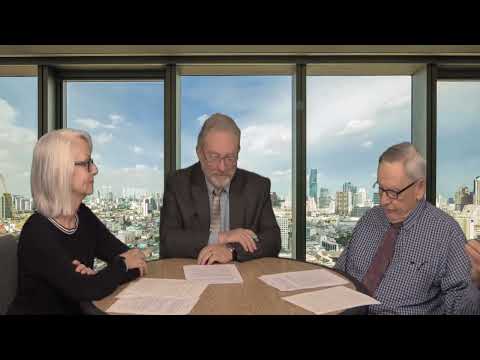
>> Welcome to Open Agenda. I'm your host,
Joe White. In the studio with me today
is Mr. Mike Goldberg from Delmare. Thank
you.
>> Mr. Jim Atkins from Mardella. Thank you,
gentlemen.
>> Morning.
>> So, we had a great week last week as far
as getting a chance to go around to the
different county parks. Connley Mill,
the potential park there, Peton, Pyrus
Wararf, but also going down to the
Westside Community Center for the W with
Tipkin Creek State Park, uh, community
town hall. Mike, you covered it. We were
able to post the entire 1-hour
presentation on PAC 14. Uh, I want to I
want to take a break and I want to break
this down into two segments. I want to
talk about what is what is going on and
maybe what we feel like needs to happen
in order to address not just the
concerns of Typkin Creek State Park but
also the concerns of the Sharps Point
spoils and also Connley Mill the
potential for that spoil dumping site.
All right, when we come back we're going
to talk about the Tipkin Creek State
Park presentation and our tour of the
county last week. So stay with us. We'll
be right back.
Welcome back to Open Agenda. In the
studio with me now is Mr. Mike Goldberg
from Delmare. Thank you.
>> Yes, sir. Mr. Jim Atkins from Ardella.
Yes.
>> So, the three of us spent some time last
week uh touring Connley Mill Park. Uh we
some of us even went to Peton Park and
out to Pirates Warf. But the main topic
was the Wipican Creek State Park and the
town town hall style meeting they had
with DNR, the secretary of DNR.
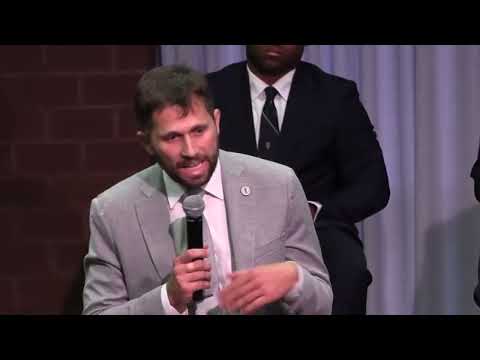
>> So good good evening everyone. Um I'm
state delegate Tom Hutchinson. Uh
myself, State Delegate Chris Adams and I
represent you in the House of Delegates
over here on the west side. Senator
Johnny Mounts, District 37 is here
tonight as well. Um, we also have
Senator Mary Beth Krosa from the other
side of Wakamako County as well. Here
tonight we have uh Delegate Barry
Beechum from District 38C. Um, here
tonight from the county side we have
Council WCO Council President John
Cannon here and we have Councilman Jeff
Merritt and Councilman um James Wyn as
well and
>> David
>> and David is here. I'm so sorry. Thank
you. Thank you. Thank you.
Um boy, this is great. Uh uh nice to see
everybody coming out. I I think
transparency is is is
um really important. I know there's been
a lot of questions, concerns, unknowns
about the future of the Pipkin Park um
coming here to the west side. So, we've
arranged this meeting. Delegate Adams
and Senator Mounts and I, we had a
meeting about a month ago with a smaller
group to really get the questions out
and we thought it'd be great to have a
community uh meeting here tonight. So,
>> Mike, who you you were there, you filmed
it. Who who was not there?
>> Um the uh there was only one individual
from the executive branch, the um
director of parks, recreation, and
tourism, Steve Miller, but there was
nobody from the executive's office. the
uh executive herself did not attend. The
director or assistant directors of
administration not there. Well, I was
rather shocked by the fact that none of
them bothered. Not only did they miss
this uh town hall meeting, but the prior
one held about a month or so ago, they
weren't there for that either.
>> Yeah. That delegate Hutchinson had had
hosted just to kind of start gathering
some of the questions and concerns. So
you you you got a lot of the the
information
>> uh approximately 210 acres of mature
forest, 80 acres of non-title and title
wetlands, 8,000 linear feet of frontage.
All of this says to the Department of
Natural Resources is that this is a
really important property for clean
water and for wildlife habitat. And this
is also a property we're very interested
in because it's already got protections
on it. Easement protection, critical
area protection, so that we won't be
impacting any of those or considering
any type of development um in that
property. And I think that's that's one
of the things that we wanted to discuss
with you all tonight. Uh next talk,
please. Um so just really quickly, map
of the park um as you can see here.
um as you can see there. And then here
is um just another one with kind of
existing land uses. So this is showing
you where there's buildings. This is
showing you where there's agricultural
areas, forested areas um and marsh
areas. Um as well as some of the
incredible restoration and preservation
work they've done on the the property
and the facilities there. Um and I think
one of the things that we kind of joke
about when we get new parks and new
facilities is if somebody else buys that
land and you have an issue with what
they're doing, you guys kind of got to
figure it out yourself. Well, you can
call any of the elected officials in
this room and and I'm I guarantee you I
will hear from them um and we'll make
sure that we have any fix any issues.
So, we have a highlevel conceptual idea
for this park that we wanted to share
with you tonight and really it's about
passive recreation. This is not a park
where we have intentions to do
infrastructure development. This is a
park where we are envisioning minimal
kind of trail usage, walking, bird
watching, those type of opportunities.
Um, we would also be making sure we're
staying on top of any concerns for deer.
Um, we have archery programs on all of
our many of our our properties. Um, even
in areas that are suburban and urban.
Um, so we can ensure that we're managing
deer population so they're not in
negatively impacting the surrounding
land owners. Um, we see this as an
opportunity to potentially bring school
children out to get a feel for it and to
see it. Uh, understanding that the the
existing roadways and things um are not
conducive to bringing a lot of people.
That's a good thing. We're not trying to
build a very large park where we're
driving thousands of visitors a year.
What we are trying to do is create an
incredible experience for the folks that
come down here and want to go on the
property.
>> Um Jim, I mean, you you got a chance to
see the presentation as well. Did did
you have a better understanding about
the process for the state park at that
point? Yeah, I think the uh DNR
secretary really uh
gave a lot of information and and
quieted a lot of concerns that the local
people had down there about what was
going to happen with this park. Uh how
they were going to be affected not only
by noise and people, but also property
taxes and property values for their
area. And and he he laid things out, I
thought, very well for these people. And
there was a definite
contrast to the premeating which was
held about a month ago which at times
got a little vocal.
>> Yeah.
>> And a lot of concerned citizens.
>> Well, and and and the basis of this park
is we're finding out from the
presentation is is more of a a limited
use park. Yes. Uh they're going to
they're going to have very limited
amount of parking. They're only going to
bring in certain number of visitors a
day. So, you're probably talking more
like field trips for students and Yes.
Yes. That sort of thing. And that's one
of the things they addressed about, you
know, having having buses for field
trips and educational things with the uh
with the buildings and the homes that
are there that the children like Peton
Park can get a good idea of some of the
1700 architectural and how people lived
back at that time. Well, what did you
find out about the existing park
features that are there right now?
>> Well, I think the most prominent feature
is Long Hill Plantation House, and it's
uh been preserved. It's uh presently
occupied, excellent condition, ready to
turn over to the park service. It's it's
turnkey, ready to go. Um they also have
a lot of period furniture in there as
well. Some of the concerns, particularly
hunting was the most prominent. They
haven't determined whether or not
they're actually going to allow hunting.
It is a possibility.
>> I think one of the only questions that
was asked down there that the people
were not given a direct answer to
because there probably isn't a direct
answer is
the adequacy of the roads. Uh the
secretary spoke about uh possibly having
to do some road improvements because
they are narrow country roads down
there. You know, addressed the fact
that, you know, Nanoke Road, state
highway, the state would be responsible
for that,
upgrading that or whatever was
necessary. But when we got into the
county roads, there was not a
delineation on who would be responsible
for improving or changing the county
roads, whether that would be a county
expense or a state would cover that. But
>> so that's that's a state issue at this
point really. Uh and the contract's not
been signed. Uh we expected it to be
signed this last summer, but it still
has. It still seems eminent, but it's
not done.
But part of the tour was also talking
about partnership parks and and that was
a new term for me. Uh the secretary was
also at Connley Mill Park and and Peton
and Pirates Wararf
>> and and I got to hear him speak about
what a partnership park is.
>> Uh welcome everybody. My name is Steve
Miller. I'm the director of wreck and
parks and tourism for Wcomo County.
Thanks for coming out today. Um we are
joined by Secretary Kurt from DNR. So we
appreciate you taking the time to be in
Wcomaka County. Um, while the secretary
was in town, the conversations of
partnership parks has come up. And so
what we're doing today is just making
three stops. These are just real quick.
I wouldn't even call them tours. They're
just site visits at three locations.
What I wanted to do first is ask the
secretary if he would be willing to tell
us what is a partnership park because
not everybody knows exactly what that
is. So Mr. Secretary, if you don't mind.
>> Yeah, good uh good afternoon everybody.
It's great to see you all. Great to be
here. I'm looking forward to the tour.
So the great thing about a partnership
park is it is uh loosely defined. So
when we think about partnership parks,
it really is how does the state,
primarily department of natural
resources work with our towns, our
counties, our municipalities,
nonprofits, uh to establish parks that
have the most important and most impact
for the communities. And I think one of
the things we really like about it at
the department is it allows us to ensure
that the park is going to fit in really
well within the community that it's part
of. Uh being a good neighbor is is one
of the most important things for the
park service. And so I think what we're
interested here in seeing and talking to
you all about is you know where can the
state be a partner in whether it be
developing a park, administering a park
um or bringing different types of
resources whether they be human or
capital.
>> I appreciate that Mr. Secretary. So
partnership parks can be anything. Um so
the property that we're at now Conley
Mill is really a blank slate. So this is
this is a just a piece of property owned
by the county. It's about 230 acres.
>> Um so but it's a blank slate. It's not a
park at this point. It's just a piece of
property. Uh where we are is in the
Conley Mill property. To your right, to
your left are man-made. Um these ponds
here, they're going to be about 15 to 20
acres. Uh right now, our our public
works team is digging dirt for the
landfill. So, these are man-made. Uh
these two here. And then to your south,
um one of one of a couple unique things
about this property. So, again, it's
about 200 some acres. Um, you've got a
lot of woods that head that way and
you've also got a lot of elevations. And
those those of you I'm preaching to the
choir here from the Eastern Shore, we
don't get a lot of elevations in a lot
of places,
>> but in this property, there's certain
elevations that go up to 40 foot
elevations. So, you have some different
contours which make could make for some
interesting things in a park. Um, and
then the other unique thing is its
location. So, as you can see by the map,
this property could connect directly to
our Henry Parker Sports Complex, which
is that way, which is our main hub,
athletic facility, and then also the
city of Salsbury's Naylor Mill Forest,
which has some forest trails. So, when
you talk partnership, something could
look like state, county, city, you could
potentially piece things together to um
to have something interesting. So,
>> and and they they're a broad spectrum.
Uh there's ones where the state's
basically running it and there's ones
where they're just kind of helping to
get things going. And the thought is
that if this is if if Watipkin Creek
State Park is more of a a passive use uh
educational park that maybe the state
could step in and do a partnership park
for something more for the residents
here.
>> Uh when we at the Conley Mill, it was a
my first chance to actually be on that
property. Uh it just seems like it has
such a great uh it's a blank slate. I
mean
>> Oh yes. It seems like Connie Mill is on
the bottom of the possibilities
due to all the the soil being taken out
of there for the landfill. Uh county
looking that possibly taking dredging
material over there and dumping it and
making the statement that there's 30
years of capacity over there. Well, you
can't build a park if you're got 30
years of capacity of work to do over
there.
>> It's going to be very difficult for a
park and the potential industrial
operations, not just the mining, but if
they are going going to be using it as a
deposition site for the Wakcomo River,
dredge spoil and the forest slash that's
stored at the landfill. You know, it's
going to take a lot of processing, a lot
of heavy equipment, a lot of noise, a
lot of activity. So we hope I am hopeful
that they will get this issue worked out
with the
>> and at the end of the day you're talking
about carbon credits and and saving the
environment by doing that. But just
anecdotally without getting buried in
the numbers I mean thinking about having
all these diesel powered dump trucks on
the road moving this material around
>> how much could we possibly save
>> there? I I think that is a bait and
switch to tell the truth. um the the
amount of carbon that will be generated
by 27,000 or more truckloads, which is
what we've calculated to move the volume
of dread spoil that exists at Sharp's
Point, that's going to put out one heck
of a lot more carbon than um forest/
treeing
trees decomposing naturally. So, it it's
uh I'm very concerned when um members of
the administration put out that kind of
information because on the surface it's
absurd. I'm in the process of actually
doing some calculations on that which
we'll share on another show.
>> So, the and in attendance for these
meetings again, we had council members
like Councilman James W was there,
President John Cannon, Vice President
Merritt. Uh we still didn't see the
county executive there. and and whether
you live in Shadow Hills or you live out
at Peton or Pirates Warf or down in the
west side, the community has said that
these these are important decisions and
yet we don't see that interaction and we
definitely don't have a public meeting
with our county executive.
>> Well, you know, there there's a lot of
history with the county executive not
showing up for important things, you
know, such as the work session for the
landfill crisis, not there. And we have
this meeting about Watipkin, not there.
About the possible partnership parks,
not there for that. Um the executive uh
was also absent for as we mentioned
earlier for the earlier um town meeting
about uh with Hipkin. She um just
doesn't seem to want to show up if um I
I I don't think she wants to answer hard
questions. She's not going to put
herself in that position. So, when it
comes to transparency, one thing we we
heard on April 15th of this year was
that 100,000 cubic yards of material had
to be out of Sharps Point by October
1st. Uh, or we are likely to go to be
skipped on the dredging of the Wakamako
River. Uh, we have an a council meeting
set up for Tuesday, October 6th. Jim,
are you interested to to hear a progress
report on how we're doing?
>> Yeah, I'm I'm hoping to hear one. I'm
hoping to hear one on on
what progress they've made. Uh because
my understanding is the it's not
complete and we are filming on the 30th
of September. So tomorrow is October
1st.
>> The deadline
>> the deadline imposed by the Army Corps
of Engineers. We are required by the um
Army Corps of Engineers to get a 100,000
cubic yards out of Sharp's Point by
October
>> October 1st.
>> October 1st of 2025 if we want to stay
in rotation to maintain our dredging at
the on the Wakama. So, if we want to
maintain our place in line and keep the
um the river open for the boat traffic
that we have on the river, we need to
remove 100,000 cubic yards by uh October
1st.
>> Does it mean that we are being bypassed
another year for the judging in the
middle of the Wcomo?
It there's just there's no answers. But
this all started
with coming to the county in April, as
you said, needing $2.3 million
immediately
>> the next day.
>> The next day to get this done
>> so that we weren't skipped. So, let's
find out where we're at and what
happened.
>> Well, and then you got to remember that
was that was the 2.3 million that was
needed that day. Yes. And then when we
went through the capital budget,
>> gave them another seven and a half
>> $7.5 million. So, uh, and and and you've
done a lot of the calculations. You came
up with 10 to 12 million by their own
numbers.
>> We're probably headed towards that
higher end number.
>> 12. Yeah.
>> But, but more importantly, these are
decisions that were brought to the
county council last minute. They were
asked to make decisions on on large sums
of money. There has to be a level of
accountability to make sure the work's
done on time. Right.
>> Well, and it's just like with all the
other past decisions that are brought to
the count council and they need an
immediate answer.
They paint the bleak picture of if you
don't agree with us on this, this is
what's going to happen. If you don't
agree to give us 2.3 million and we
can't move the dredge material, the Army
Corps of Engineers is going to skip us
for another year and we're in trouble.
>> Executive has been in office for 3 years
and our river has not been dredged one
time, not one section of the three, not
one time in in her entire time in
office,
>> but she's known that this has to be
done. Now, prior administrations, you
know, preceding the current county
executive have been pretty lax on this
as well. You know, shame on them. But
the current county executive, she's been
in office for almost 3 years at this
point. And this has not been a high
priority until a crisis is on the on the
immediate horizon, and that's
unforgivable.
>> There's one other aspect of this that
has really bothered me since that April
15th meeting. one, that was kind of a
surprise resolution that he was even
brought, but there was $1.2 million
already set aside in the last four years
for the public works to move spoils out
of Sharp's Point. Obviously, at a slower
pace than what we're doing with 2.3
million in 6 months,
but but the question has been asked and
I don't have not received a satisfactory
answer. Where is that $1.2 million? They
are they are saving that they say for uh
fencing silk fencing and and other
design drawing that they say is is to be
used for that. Now there's no proof that
it is there but that's why they did not
want to spend the 1.2 too that and then
you also have the environmental
committee
for the county
and a gentleman by the name of Dave
Kersonen who's involved with dredge soil
spoil management
at the last meeting that they had
his statement was that uh
he thought the his understanding was
that the dredge material being pulled
out of the Wakcomo, not at what's
already stored at Charge Point, but was
being pulled out of Wakcomo was going to
be sent to D Island like it was last
time
>> with with uh
>> Bob Culver with when they did the lower
end of Wakcomo and that was he was
operating under the assumption that that
was going to happen again. It's strictly
uh the right hand doesn't know what the
left hand's doing.
And where where did he make that
comment?
>> At the
>> natural resources resources
>> conservation advisory committee meeting.
>> Exactly.
>> That was on September 10th.
>> Yes. I can't
>> the same meeting that the uh that the
that the the idea was floated to move
the spoils to Conley Mill. Okay.
>> And and yes,
>> I I think any kind of a plan that
involves shipping all of this material
overland by truck is is going to be a
boondoggle. there are better options
available.
>> Well, thank you both. I appreciate you
going through this process and obviously
there's going to be more meetings and
more information that needs to come out
and and I think the goal has got to be
that there should be public engagement
before decisions are made and and and
not put us up against a budget deadline
of a day.
>> So,
>> yes, sir.
>> So, stay with us. We'll be right back.
>> Welcome back to Open Agenda. Mr. Mr.
Mike Goldberg, thanks for sticking
around. Of course,
>> Mr. Jim Atkins, thanks for staying here.
>> So, we talked about in the last segment
our frustration with some of the folks
from the administration of the county
executive's office not being at the last
uh being at the at the Wooden Creek
State Park town hall now and even a
month ago, not being at the landfill. I
I want to I want to go a little bit
further into that. I mean, we we did go
to the bond market last week and that is
where these folks were, but I want to
talk is is that really a good use of our
resources in the county? Do we need as
many people up there as go? Because the
amount of people that go,
I'm sure 50% of them never speak these
bond hearings. I mean, you definitely
need a director finance.
>> Yeah. You either need the executive or I
in my opinion would say that the
director of administration is more
important to have up there than the
executive
>> and perhaps the accountant from the
accounting firm that that prepared the
the package for the bond rating
agencies. I've even got a question if
it's even necessary to actually appear
in New York in this day and age. A lot
of this stuff may be done by Zoom. True.
Certainly any documents that have to be
signed that can be done electronically
or it can easily be done overnight you
know through overnight courier. Um I
think that this was a frivolous
expenditure to send that many people
there at taxpayer expense transportation
hotels meals. The part I find
particularly troubling is that whenever
we have an important issue, it seems,
you know, such as with Tipkin or the
landfill uh uh work session, the county
executive is absent.
>> Yes.
>> You I don't think that she actually
wants to face her constituents. I don't
think she actually wants to answer the
difficult questions. you know, she shows
up in the in the very beginning when uh
everything's a great idea, but then when
you get into the minutia of it and you
find out all the the little points that
go with it and it turns into a not good
idea or it's a negative effect on the
county or the citizens don't agree with
it, then all of a sudden
there's nobody to be seen anymore. It's
a hot potato that got dropped and they
ran off. And look, today we're talking
about state parks, partnership parks.
Yesterday, months ago, we were talking
about the landfill. In October, we're
going to be talking about the 287gu.
And she just came out with uh an
interview in a in a in a big paper
>> stating that ultimately the county
council is going to make this decision.
>> This really just seems like a political
chess move to get them on the hook to
make an unpopular call. They haven't
been part of this process at all.
>> No question in my mind. They were not
part of the process and now suddenly
she's going to force them into making
the decision. She's already made the
decision, but she's going to let the
council be the fall guy. And it doesn't
matter what decision you make for or
against 287g.
Half about half the people in this
county are for it. About half are
against. you're going to make at least,
you know, one significant, you know,
group of people in this county pretty
darn angry no matter what you decide.
>> We saw this maneuver verbatim with the
Ross tax credit. The Ross tax credit,
they missed the deadline, they did for
whatever reason,
>> uh, and then when it got decided to go
ahead and still let them had the Horizon
tax credit to the tune of millions of
dollars. This is not a small amount of
money. She came out and said that she
didn't even have to sign it. I have her
signature on the resolution. She signed
it. This was something that it was
really her her decision to make. At the
end of the day, she could have vetoed it
and it they didn't have the the votes in
the county council to override the veto.
It passed four to three.
The these type of maneuvers just erode
the the the public trust. I was misqued
at the last council meeting and we did a
show on me being misqued.
>> I got lunch about Yeah. And you got
lunch about me banning chickens.
>> So, I I want to just touch on real
quickly
>> uh something on the uh article that the
interview she did on Friday with a major
newspaper.
And to make sure I did not misquote her,
I I'm I make sure I have it here exactly
how she stated to the newspaper. And her
quote is, "I think over the years,
government has proven itself probably to
not be trustworthy at times.
However, I feel like my administration
tries really hard to put the information
out there." End of quote. And uh she's
correct with that uh the people don't
trust the government, but uh she's not
correct when she says her administration
tries really hard to put the information
out there.
>> This has got to be the least transparent
executive administration that I've ever
witnessed, either here or back in my
home in Texas. I've never seen anything
like this. everything that can possibly
be done behind the veil of a curtain.
That's how it's done.
>> Well, the the the stand that she will
make
on this uh ICE agreement
and saying it's the council's
determination on whether or not we have
one is that it's going to be anou for
365 days or longer.
before and the council has to prove it.
It was 365 days or longer where in the
past she has done a 364 day
>> to avoid you know yes to avoid the
council
>> and all of this may be moot come next
spring when the general assembly meets
because the Maryland general assembly is
very likely to pass a state law saying
that theseus are not even going to be
allowed and the ones that are are going
to have to be dissolved. So, I I really
believe this is just all about a
political victory and really a shallow
one at best. Uh and and then we're still
not even having the right conversation
about whether or not there's merit to
287g cuz even amongst every contributor
to the show and every guest we have on
the show, we don't agree. But we are
able to have a public discourse. Well, I
I would go one step further, and I I
don't want to
appear as I'm tooting Open Agenda's
horn, but I think anybody who has
watched Open Agenda has learned more
about the uh 287gs and the and the
possible ice agreements than they've
gotten from any other information, from
any politician, sheriff. I'm hoping that
the county council will not take the
bait on this and tell the executive, you
have claimed to be the leader of this
county. You make a decision and then we
will either endorse your decision to go
with 287G
or we will not go with it, but let her
make the decision first cuz the fact is
the ball is in her court. Well, it's
been touted that there's going to be u a
work session on October 6th, which is
the Tuesday meeting coming up. And let's
see if it actually gets on the agenda,
and we'll keep everybody posted. So,
>> thanks for watching this episode of Open
Agenda. We'll be back later this week
with another new episode.
How can we make it hard right at the