You're watching Open Agenda. Here's our
host, Joe White.
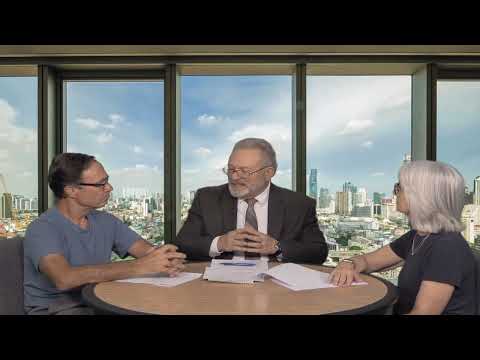
>> Welcome to Open Agenda. I'm your host,
Joe White. In the studio with me today
is Mr. Mike Goldberg from Delmare, Mr.
Jim Atkins from
>> Y.
>> So, it's not normal for us to have a
show that comes out on Monday. Um, this
show is going to be about what's in the
briefing book for tomorrow night's
county council meeting at 6 o'clock. Uh
we felt compelled to do this because
there's over 170 pages, a lot of
information and there's contradictory
information from the county executive in
this. Um Mike, I want to go through the
timeline that Jim has prepared and the
notes that you have prepared. I want to
give everybody just the facts and then I
want to take a break and come back and
do some analysis of those facts because
it's it's nearly impossible to comment
on it while you're trying to go through
the timeline. But there's a lot of lot
of things that have have have been I
would say restated that weren't facts in
July. They're now all of a sudden are
supposed to be fact in October. All
right. So stay with us. When we come
back we're going to go through the
timeline and then later on we'll give
you some analysis of what's going to
happen at Tuesday's meeting. So stay
with us. We'll be right back.
Welcome back to Open Agenda. In the
studio with me is still Mr. Mike
Goldberg from Delmare. Hey
>> Mr. Dr. Jim Atkins from Mardell. Thank
you for sticking around.
>> Sure.
>> So, we we're going to go through the
information that's in the brief book for
the meeting this coming Tuesday. It's a
night meeting six o'clock in the
government office building. Uh the brief
book came out last Friday and there's a
lot of information in it. Um over 100
pages, right?
>> Yeah. It's in the uh I think it's in the
170s.
>> Yeah. So, let's let's go through the
highlights. Uh first off, we're going to
talk about the 287G,
the MOA, the memorandum of of agreement.
Now, we have been told since day one
that this is going to be between the
sheriff's office and ICE. And I want to
go through a little bit of that time
history, but before that, we we're also
we're finding out now that this MOA is
actually between ICE and the Department
of Corrections, right?
>> That's correct. Yeah. Sheriff's
Department is never mentioned in in the
MOA. So, in order to get here, I mean,
we started back in July, specifically
July 25th, right? And and this came out
from Mike Lewis, uh, on an interview he
did with WMDT, stating that he had an
ICE a potential ICE agreement and and at
the time, and even the county executives
talked about this through the month of
August, they were going to do the jail
enforcement model, right?
But we found out on September 4th that
they've actually changed it to the
warrant service officer or warrant
>> warrant service officer.
>> Yeah, warrant service officer
>> uh model and that was because they the
expense of the JM model.
>> Correct. Uh, now we have been told that
the sheriff's office is fully staffed
now, but Julie stated back on September
4th that they were switching this model
because of potential shortages in the
sheriff's office.
>> Correct.
>> We've documented on other shows that we
don't have enough student resource
officers in the schools. So, even if
we're fully staffed, we still have some
gaps, right?
So, one of the big dates I have on my
list that you prepared, Jim, is
September 22nd and and Julie made uh she
had an interview with WOC and she stated
that she that we want to ensure the
council and public have a full
opportunity to review and discuss this
proposal before any final decisions are
made.
>> Correct.
>> Okay. Now, in this briefing book, there
is a final decision in the briefing
book, right? The MOA is basically like
this is a yes or no.
>> It's written. It's there.
>> We haven't had a public work session.
>> Nope.
>> Uh Mike, I know you haven't missed any
meetings. No public work sessions. No
comments other than public comments. And
there's been several people who have
gotten up. I mean, you and I are are in
favor of the of the agreement,
but we're not in favor of the lack of
transparency of this agreement.
>> It's it's not always, you know, what the
end product is. It's how you got there.
you know, it's uh you know, the means
by, you know, it's the means to get
there.
>> So, just 4 days later on September 26th,
we we we we had more of another
interview with Baltimore Sun County
Executive. She stated in that interview
and and I I would really encourage
anyone to go get that interview. Yeah,
there's a lot of good information. And
one thing, if you go to the Baltimore
Sun uh website to read the article,
it's not going to let you read it unless
you buy a subscription to the newspaper.
But if you stay on the same Google page
that it is on and you go down a couple
lines, there is a uh site there that
will let you see the article for free.
Okay?
>> So you're able to read it. So Google
Baltimore Sun September 26th,
>> but that that that talks about that they
were drafting an agreement with ICE and
that the final decision would be made by
the county council.
>> Yes.
>> And and and Mike on the in the briefing
book. Um I know there's some discrepancy
there, but there is no place on this MOA
for the county council to sign or the
sheriff's office, which may just be a
product of it's not a a final draft, but
also at the same time, it may not be for
them to sign, right? I mean, there's
possibilities.
>> I I I don't believe that the council has
to be involved uh in uh endorsing this
this agreement.
>> All right. So, again, stating with
what's in the briefing book, what what
we can see, there's there's emails from
the county executive to the county
council in there. Uh you know, our
understanding is she's not real happy
with some of the information that has
been put in there, but it's the most
transparent form. She's not happy that
the email that she sent was put in the
public briefing book, but you know, it
should be public information.
You know, you're outlining what your uh
MOA is going to be and you're answering
questions that the council might have.
Well, why are you afraid to let the
public see that? You know, it's
information the public wants to know.
You're going to have an open work
session tomorrow night on this. There is
no
public hearing scheduled at this time
and the best of my understanding there
is not going to be a public hearing
scheduled. So the only chance you're
going to get because the work session
will happen after the public comment
session of the council. So, the only
choice or
>> opportunity
>> opportunity, thank you, that you're
going to have to to speak anything about
this is going to be in the public
comment section prior to their
presentation. So, if you don't know what
you don't know, you're not going to be
able to stand up there and address your
concerns because 15 20 minutes later,
they're going to talk about it, but
they're not going to allow you to ask
questions or talk about it at that point
in time.
>> Well, and that's why we that's why we're
doing this show.
>> The one place that people can get the
majority of the information is go to the
wcomakookount.org
website
>> and they can go to the agendas and get
to the briefing book. Correct. So the
the first item on the left column, if
you go to Wcomakico County Council and
that page comes up on the very top left
hand side, you will see the first
listing says briefing book and all you
have to do is click on that. It pulls up
the full agenda and it folds up the
entire briefing book.
>> Okay. So for people who haven't been to
meetings before, I think we should also
explain they're going to have their
legislative session.
>> Yes,
>> that agenda is posted. Then there's
public comments. Then there's even a
chance for the council to have comments.
>> Correct.
>> Then there's a open work session. Now
once they start the open work session,
there's not another chance for the
public to speak. That's what you
>> the public. Yeah. The public is done.
All they can do is sit there and listen.
And uh as in past instances,
sometimes when you hear things, they're
not accurate, but you can't respond to
them. Yeah.
>> And sometimes when you are accused by
the executive of saying something that
you did not say, you don't have the
opportunity to respond and explain to
the county that you're wrong.
>> I want to talk about who that happened
to.
>> I want to talk about that more later on.
>> All right. So, a couple other items that
are on the agenda that that are
important and they're in briefing book
as well is they're going to move another
$185,000
from the fuel farm out of the airport
into a a project out there for for uh
technical Yes.
>> for the tech school.
>> So, this is after just on September 2nd,
they moved money for the fuel farm to
the ARF building, which is the
firefighters building out there.
>> Exactly. Um, so now we're in a situation
where we know the fuel farm was
overfunded, I think as Councilman Enis
said, by about 30%.
>> Y
>> and we have we have brought up before
that the other projects have been
overfunded and then the money being
redistributed to other projects later
on. Uh, so that's that's on there. And
then uh I also want to talk about what's
not on there. Uh our last show last
week, we just we we covered the tour
that DNR took for the uh partnership
parks uh with Typican Creek State Park,
which I understand why that's not going
to be on there. but also this idea that
they may start moving dredge spoils from
Sharps Point into Conley Mill
and in the fact that we've now passed
the deadline October 1st to move 100 the
first 100,000 cubic yards of uh spoil
out of Sharp's Point, but there's no
update. I mean, $2.3 million and we
don't know are they there? Did we spend
more? Did we spend less? What are we
doing? Well, you've not only got that,
but you you've got a representative from
the state who dealt with the dredging
back in, I believe, 2021 with uh
Executive CER,
who was under the impression that
this judge material was going to be
barged to deal like it was in 2021. And
they're kind of like, what happened?
They don't know anything about not
getting it. So,
>> um, in looking for what the plans are
for the next dredging project, um, my
research thus far has not is not
complete. But what we do know is that
the last dredging project was completed
in 2023. I believe it was in December of
2023. And all of that material was
pumped directly to a 75 acre site on
Deal Island to restore it. And that was
fun from the from the lower wcom when
they dri lower.
>> So future projects will cover I assume
the middle portion and the upper
portions up to Ssbury but the lower the
lower part near the uh entrance to the
Wcomo River has already been taken care
of. Right. So,
>> well, I want to take a break and when we
come back, I want to go through this
timeline that we we already stated
>> and talk about because we we've been at
present at the meetings and talk
specifically about concerns we think
folks should have.
>> This isn't about whether or not you
agree with 287g
or not because we don't all have these
same opinions.
>> It's just trying to get the transparency
out there so people can make a logical
decision. Are you in favor of it or
aren't you?
>> Yeah. All right. So, stay with us. When
we come back, we're going to dive more
into the details of the MOA with ICE. So
stay with us. We'll be right back.
Welcome back to Open Agenda. In the
studio with me still is Mr. Mike
Goldberg. Thank you,
>> Mr. Jim Atkins. Thank you.
>> All right. So, gentlemen, we laid out
the timeline. Uh there's a lot of
duplicity. There's also a lot of
contradiction and I want to go through
specifically
what information the public should be
looking to come out of this work session
and maybe what things that they should
know that probably aren't going to come
out of this work session. So Jim, I want
to start with you.
>> All right. Well, the first thing that I
want I want to hit is the comment that
continues to be made from the county
executive is that that this is a
costneutral
agreement that there will be no cost to
the county or to the county taxpayers.
Uh our county executive was a teacher.
It's quite apparent she was never a
business owner or operator. Uh if she
was, she would understand
that
when you take someone from their job
and you to do something else and you
have to replace that person's with
another person, there's an additional
cost to it.
>> Anybody that has a business understands
that. And more than likely, if your
department of correction is, as I've
been told by reliable people, about 28
people short on staffing.
When you take a correctional officer and
send him to an 8-hour class, you have to
pay somebody else to cover their shift
at the correctional department. And more
than likely, that's going to be an
overtime cost.
>> Yeah. Cuz they're already maxed out.
>> Yes. They're already maxed out. they
already have their own shift. So there
is a cost to it. You know, you can't say
there isn't a cost. One of the second
things in this new MOA is that uh ICE
has the ability
to use our Department of Correction
officers
to transport
illegal aliens from Wakcomo County
Detention Center to the ICE detention
center which could be in Baltimore,
could be anywhere. So, we're going to be
paying our correctional officers to be
transporting people. So, there is an
additional cost
>> potentially. The MOA is actually silent
on who bears the cost of that. So that
could be a friction point if uh
>> well yeah it's it's silent on when that
states but earlier in all the part of
the MOA it's talks about the salary of
the law enforcement officer being the
countyy's responsibility. So I cannot
foresee how this would be any other
difference.
>> And Mike you laid out the financial
obligations that the county would have
and then what ones the ICE has. It's
it's it's not very even. Um, I mean,
travel, housing, pdeium, all has to be
paid by the county for the the folks to
to get trained, right? It
>> it's it's a very lopsided contract that
favors the federal government. Uh, you
know, basically the county pays pretty
much for everything to provide a service
for the federal government. It's
backwards. The federal government should
be paying for the services provided by
by the county. Um, it's a really sweet
deal for the feds. And if uh I if I were
negotiating this contract, it would
>> and and that's that's the thing that
that really throws it all into
perspective.
The federal budget for ICE this year.
Last year was $10 billion with a B.
This year it was raised to $29.5
billion with a B. So, they got a three
times budget increase,
but they want to put the cost of this
agreement back on the county.
>> Well, and look, Mike, you and I are we
both have publicly stated that we're in
favor of having some sort of MOA, but we
both are looking for what is going to be
the cost. I mean, there should be a
budgeted amount. There's not I mean
there's no way that you can ascertain
what the costs are because nothing is
fixed there. There's too many variables.
But, uh, one thing in this agreement
that we've talked about and I've talked
about since we started this two months
ago when we first started filing it, and
I keep trying to make sure the council
members understand
is the section in this agreement which
states,
"If ICE determines the training provides
a direct service for the government and
is in the best interest of the
government,
The government may issue travel orders
to selected personnel and reimburse
travel, housing and PDM expenses only.
The law enforcement agency remains
responsible for paying salaries and
benefits of the selected personnel. So
in other words, if they open an ICE
detention center,
let's pick Baltimore for for sake of of
discussion.
They can take the correctional officers
that we have trained here in Wakcomo
County, of which we are reportedly 28
short on, and they can take the ones
they have trained, and say, "We want
them in Baltimore tomorrow. We need
them." So now we're going to be further
short here. We're going to be paying the
salaries of our officers who will be in
Baltimore County. we are going to be
paying overtime to all the officers that
then have to pick that up. Yeah. And and
that is like Mike said, that is a you
can't forecast what that cost could be.
>> I and the salient point there is is that
although the federal government may
reimburse, they are not required to
reimburse. So I I I want to talk about
the performative politics of this,
especially when it comes from the county
executive side because as you see in
your timeline, the story has changed so
many times. This isn't this is
costneutral. This is now we don't have
enough people. Now we do have enough
people. We're going to have this type
ofou. Now we're going to have this type
of MOA. At the end of the day, she is
saying she is trying to put on the
county council their signature on this.
>> Yes. But we don't believe it's
necessary.
>> No, there there's nowhere on that
agreement for anybody to sign except the
county executive. And she has authority
over the Department of Corrections. If
the the sheriff's office was involved in
this, then Sheriff Lewis would have to
sign it because she does not have
control over the sheriff's department.
But you know, and apparently the
council's not involved in this because
there's nowhere when you see all the
other MOAs andUs to come down. There's a
line for the council president to sign
on the form. There is no line here.
>> In this case, there's two criteria that
have to be considered that would result
in the county council being required to
sign off on it. One is that there's no
dollar value uh assessed to this MOA. uh
to the best of my belief under the
charter that any contract $50,000 or
more does require council approval.
There's no dollar value. So, that one's
out the door. And uh the term, the
length of the contract, a contract
that's 365 days or more would require
council approval. This is an open-ended
contract. There is no, you know, term
limit. it's uh can be cancelled at will
by either ICE or by the county. So if
those two criteria are not met in my
opinion, then the it's the uh in within
the sole unilateral authority of the
county executive.
>> So I want to I want to go back to an
interview she did with the Baltimore Sun
on September 26. And one of the things
she she says early in the in the article
is we literally had a meeting with the
mayor yesterday. He's talking about
Randy Taylor from Salsbury and we were
like stop writing press releases
>> because Randy who I think is maybe
sometimes overly transparent. He doesn't
play those political games and I applaud
him for that.
>> He put out a press release and put out
information before that political
machine was ready for it
>> that the city was was going to join in
on this. Yeah, she wasn't ready
sheriff's department.
>> She's she's trying to control this
narrative. But I also want to read
another quote that she has in there. Uh
well, actually two others. One, I think
over the years, the government has
proven itself probably not to be
trustworthy at times. However, I feel
like my administration tries hard to put
information out there. People sort of
spin their own tail. Okay. She's right
about herself.
>> Yeah, she's spinning her own tail. Yes.
because in and what we don't see in this
agenda tonight is is is about Sharp's
point. We're not going to get into that
much in this show because they're not
going to talk about it,
>> but we're seeing this this this story
changes all the time and and then I I
want to give people just a little bit
more of a of a look into really this
thinking. Um she she goes on, she was
reluctant to use the word targeting, but
added targeting a specific group of
people. This program would be targeting
a specific group of people who are
breaking laws.
And we're not just talking about
immigration laws. It's literally you are
breaking laws here. You are causing
havoc here in the community. And those
are the people we are like maybe ICE
does need to vet them. Then she goes on
to say, are they supposed to be here?
And if they are, they'll be released.
I'm telling you, this is a dangerous
slippery slope we're going down. Yeah,
>> this is where you're seeing that first
we're going to detain people, then we're
going to decide whether or not they
should be here. That is not the story
that's being told about what this WSO
policy should be. Mike, you and I are in
favor of the WSO.
>> I am too. I I am too. I I full I I I
fully agree with it, but I have I have
confusion with this.
>> Okay. I have limited law enforcement
experience from
almost 50 years ago.
At that point in time, when a person was
arrested,
they did what was called a 1029,
which was police code for check for
warrants and wants. So if you did that
check for wanted, it would come back
through the criminal information center.
That person had a warrant for them
anywhere in the country. And then if you
would hold that person for that reason
in addition to wherever you were holding
them to begin with and you would notify
the jurisdiction that issued that
warrant. At that point in time, it was
up to the jurisdiction
to tell our people,
"Yes, we want him held. We're coming
after him, or no, the charge is not
sufficient for us to extradite him from
Maryland to California, so do what you
want with your end of it, but let him go
as far as our end." I don't understand
what the difference is now.
They do a a warrant a wanted check on an
individual now when they arrest him.
>> Jim, it's campaign season.
>> I you started campaigning and that's and
I think that that's what the people in
this county need to understand. Look,
Mike, you know, we talk about different
political views. I mean, we're not we're
not all Republicans. We're not all
Democrats.
We're being used and and our resources
are being used for political gain. Okay?
I'm comfortable saying that. And if you
don't believe me, and please don't take
my word for it, show up tomorrow night.
Show up at the council meeting 6:00,
watch this legislative work session. I'm
sorry, not legislative session, work
session. You're not going to be able to
speak, but you're going to get to see
this performative politics because as
much as I support our sheriff, this
system, this this program is not being
talked about openly and honestly by the
people who we're talking about. And the
and the problem with it is
we're looking for a problem to a
solution we already have. All this stuff
is already in. You don't have to
reinvent the wheel. You don't have to
come up with with
detention center guards going in and
issuing warrants. You don't have to have
sheriff's department people going in and
issuing warrants. All this stuff has
been happening for 50, 60 years. Why?
Why all of a sudden do we have to sign
an agreement with the federal government
that we're going to do this for you?
Just keep doing what we should have
done.
>> I don't think we necessarily do. Look,
there is an ICE office here in Salsbury.
>> Um I would uh according to their
website, it is actually staffed by law
enforcement personnel as as well as uh
people who deal with the immigration
bonds. Is there any reason that their
law enforcement people who are right on
Naylor Mill Road can't come down? I
mean, it's not like you're going to have
a hundred of these warrants a day. It's
going to be, you know, an occasional
thing. And in the event that there's
nobody available in the local Salsbury
office,
>> two hours to Baltimore or two and a half
hours to Washington DC where they got
plenty of staff.
>> I will tell you, we we have been our
show has been there's been attempts to
get our show shut down. Yes. Okay.
>> And this is going to be another one.
>> Well, I think what our county executive
would love for us to listen to is the
advice she gave the mayor. We literally
had a meeting with whoever may the mayor
yesterday. We're like, "Stop writing
press releases.
>> They don't want this information out."
And if you want another example of this
is moving money from the fuel farm over
to this this tech program out at at uh
the the school out at the airport.
The government is asking us not to ask
questions. And every time we ask a
question, we find another preposterous
answer. Um, just to Mike's credit,
there's probably a very simple solution
to this 287g problem.
>> As you said, we we're looking for a
solution for a problem we don't actually
have.
>> People need to show up.
>> Yeah. Now is the time to actually
instead of listening to what they're
telling you that they want you to hear,
you need to go see it for yourself. And
another thing you're going to hear
tomorrow night
is a proposal
because the department heads of this
county that all get paid $100,000 plus
now want to come back to the council and
say, "Oh my, we uh we didn't think about
raises for our part-time employees in
the last budget session. So now we we we
want to give raises." Well, you know, I
if you have a balanced budget that you
have to present for July the 1st,
you know, the best way to Yeah. The best
way to balance a budget is don't put
cost in there,
>> right?
>> And then wait until two or three months
after the budget and come back and go,
"Oh, oh, well, I I make $120,000
plus, but I I forgot to say our part-
timerrs need a raise."
>> All right. So, Tuesday night, 6:00,
government office building, room 301.
>> Great.
>> And uh be ready for public comments. Not
going to be a short meeting. Nope.
>> But these are your tax dollars at work
and these are your tax dollars getting
spent.
>> And I would say to everybody, you may
not take an interest in your government,
but I assure you that your government is
taking an interest in you. And if you
are not there to witness what the the
the actions of the government and to
actively participate, then you're going
to be ruled rather than governed. Don't
don't let the information that you get
by press releases and interviews from
the local papers and the local
televisions
be
your belief on what's happening because
believe me when you get into that
council chamber and they talk about
things it's very rare that what you've
seen on TV or read in the local paper is
how this plays out at the end of that
meeting. give you a chance to see how
the sausage is made. And you can bring
the eggs because you have the chickens,
right?
>> Well, I Yeah, I I'm banning chickens,
but I'm trying to find one after I tried
to ban them. I'm trying to find one to
bring to the to the council meeting.
>> You know, it' be interesting. You talk
about that. We we've joked about it.
We've even had lunch over on camera, but
um it was interesting that the county
executive chose to discredit what you
had said at a meeting. Yeah.
>> Uh because you I it's been very public
that you've been working on this. Yes.
Yes. So, I mean, you know, and and I
made a joke to one of the uh Pack 14
executives this morning when I came in
that uh this may be the very last time
you see us because she has tried before
to have us uh removed and I'm sure after
today it might happen again.
>> Yeah. So, thanks for watching this
episode of Open Agenda. We'll be back
later this week with another new
episode.
Nobody tells me unless I ask.