You're watching Open Agenda. Here's our
host, Joe White.
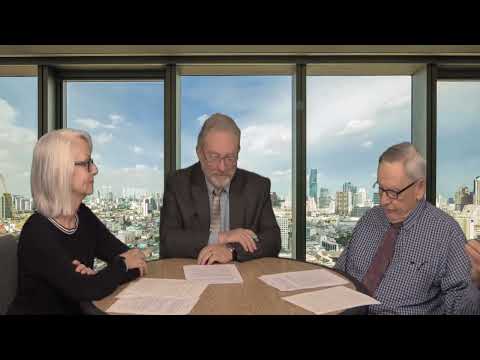
>> Welcome to Open Agenda. I'm your host,
Joe White. In the studio with us now is
Trish Melvin from Fruitland. Thank you.
>> Mike Goldberg from Delmare.
>> Good afternoon.
>> So, Mike, I know you have been staying
on top of the NRCAC meetings. uh you
have done work with Conie Mill, but
someone who has really spent the
majority of their time really focused on
the save Connie Mill aspect is Muel
Darene and her husband James as well. I
see them a lot at parks and wreck
meetings. Uh they've been there to work
in work sessions to help get a dog park
at Leoners Mill Pond, but also
benefiting. She was uh recognized as a
volunteer uh with the county for her
work with the uh the football program in
Salsbury. I want to bring her in and I
want to talk about uh the Save Conley
Mill Park Initiative and Trish as many
meetings as you've been attending. Uh
I'm sure you've not heard much about
Connley Mill being there for the 287G
um discussions, but I want you to to
listen into what Muel has to say and
then I want to bring you back in and see
what kind of insight you have gathered
just from from hearing it. See if
there's any similarities to those two
stories.
>> Looking forward to it.
>> Great. So stay with us. When we come
back, we're going to bring in Mikuel
Dalene and we're going to talk about
Save Connie Mill Park. So stay with us.
We'll be right back.
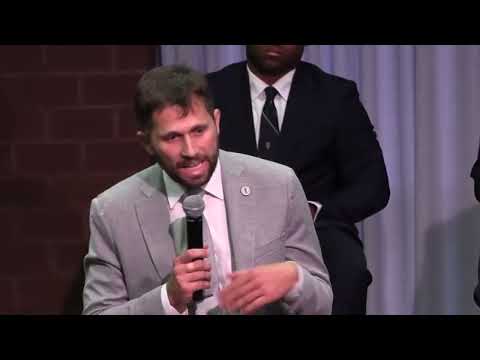
Welcome back to Open Agenda. In the
studio with us now is Muel Dalene from
Delmare. Thank you.
>> Mike Goldberg, thanks for sticking
around from Delmare.
>> Of course.
>> So Muel, I want to ask you, I've seen
you at many county council meetings. Uh
what got you involved and and and why
did you get started going? So my husband
and my family, we moved to Wakamako
County and when we were buying our
house, we had heard about Connley Mill
Park. Um we had kind of researched it.
We knew this was coming and we wanted to
be close to it, be a part of it. Um when
last year's events of Safari decor came
up and we found out that the park had
been removed from the capital
improvement program and the tri county
council economic development strategy.
Uh we decided we wanted to um help form
an advocacy group to protect the
original vision for Conley Mill Park.
>> And that vision came from county
executive Bob Culver back in the 2010s.
The land was donated. They had used that
property to excavate soil to build the
bypass, but it had really remained
vacant and actually had had started to
lead to to trespassers out there and
some dangerous, you know, people people
out there swimming. So, the the land was
donated to the county, but the but
before they did that, they came to the
the HOA out that way, including Shadow
Hills, not just Shadow Hills, and they
said, "Hey, look, if we accept this
donation and build a park, will you
support this?" And the answer at that
time was yes. Right. Yeah. And actually
this um the original plan was just a
testament to good governance. Um the the
at the time county executive Bob Culver
and his team won Weston Young, you know,
they did what was right. They did their
due diligence. They came to the impacted
stakeholders. They said, you know, this
is our plan. This is what we would like
to do. This is how it benefits us and
here's how it'll benefit you. and
everybody came together, both branches
of the government, um, all the impacted
stakeholders, the environmental groups,
and a good plan was formed that would
benefit everybody.
>> It's interesting that you mentioned that
you when you purchased your home, you
you were had an understanding that there
would be a park developed there after
they were done excavating soil for the
landfill. Um, and then you did find out
in 2023 that that had changed and we
there was a private event out there,
Safari at the Quarry. And although that
has not not going to be going forward,
the plan to develop it into a park is
also not seem to be moving it forward as
fast as it should. Is that right?
>> Right. So, um, being a researcher by,
um, by trade, I had looked into the
records, um, made an extensive study of
all the county council minutes and
meetings, um, from the beginning, from
where they started to consider the
donation um, until the events as far
because, you know, one thing a lot of
people don't know is that when that
first came up, people were not really so
veheminently against it. We didn't
really know what was going on. We
thought it might really just be a one
weekend event and we want more
information and we were trying to find
out. So during that process when I
started to research and I saw that it
had been removed from the CIP that year
just before the signing of theou that's
when we really went on high alert.
>> I I went to the tour uh Secretary Kurtz
came down.
>> So the great thing about a partnership
park is it is uh loosely defined. So
when we think about partnership parks,
it really is how does the state,
primarily department of natural
resources work with our towns, our
counties, our municipalities,
nonprofits, uh to establish parks that
have the most important and most impact
for the communities.
>> Um so the property that we're at now,
Conley Mill, is really a blank slate. So
this is this is a just a piece of
property owned by the county. It's about
230 acres.
>> Uh where we are is in the Connley Mill
property. To your right, to your left
are man-made. um these ponds here,
they're going to be about 15 to 20
acres. Uh right now, our our public
works team is digging dirt for the
landfill. One of one of a couple unique
things about this property, so again,
it's about 200 some acres. Um you've got
a lot of woods that head that way, and
you've also got a lot of elevations. And
those those of you I'm preaching to the
choir here from the Eastern Shore, we
don't get a lot of elevations in a lot
of places, but in this property, there
are certain elevations that go up to 40
foot elevations. So you have some
different contours which make could make
for some interesting things in a park.
Um and then the other unique thing is
its location. So as you can see by the
map,
this property could connect directly to
our Henry Parker Sports Complex which is
that way which is our main hub athletic
facility and then also the city of
Salsbury's Nailaylor Mill Forest which
has some forest trails. So when you talk
partnership, something could look like
state, county, city, you could
potentially piece things together to um
to have something interesting. So
>> there's a park that would be owned by
the county in this case, but in
partnership with the state to run
basically a state park on county owned
land, right?
>> Correct.
>> And this is an undeveloped park. Uh the
director of public or parks, wreck, and
tourism, Steve Miller, mentioned that
there's a 40 foot elevation change over
the course of the 230 acres. Yes, I
understand that it's um maybe the
highest and if not close to the highest
topographical elevation in the county.
>> Yeah. And there's wetlands out there
that should be protected and also maybe
educational opportunities out there for
folks to uh school children to visit and
see that that part.
>> Yes, it has three creeks that form the
headwater of the Wakamako River. It has
um it's located on top of the Paleo
Channel. has non-title wetlands, forest,
um ourselves in our own backyard, we see
all kinds of wildlife. Um it's a
spectacular place and it's one of the
few remaining large tracks of green
space in Makamako County.
>> You also attended the meetings for
Leonard Mill Pond Dog Park. So, we've
watched a potential piece of property in
the county that was being underutilized
be redeveloped into something that is
now an asset to the community and even
the transient uh tourists coming through
at our tourism center
>> with with dogs to go out there.
>> So, you're you're you and your family,
you spend a lot of time in the county
parks. This isn't just having one in
your backyard, right?
>> No. Right. And and we also are active
and participating in the public meetings
about the parks. Um, we try as best as
we can to be active in that because they
are amazing assets for our community.
>> So, since we've had the tour of Conley
Mill as a potential partnership park
site, there's also been other
information that's come out and Mike, I
know you've been following the story as
well through the Natural Resources
Conservation Advisory Committee. Uh, I
but that seems to to go against having
this turned into a partnership park. So,
I want to I want to get a sense for this
other angle that's being presented by
the county executives team,
>> right? Um, you know, so let let me give
you a little bit of context for that.
Before I ever came into this um, you
know, work to save Conley Mill Park,
there was a lot of community advocacy
for Conley Mil Park. Um, if you go back
through the records and um, in the
beginning in 2017, 2018, 2021, all
before I was ever on the scene, um,
there were many groups that talked about
the value of this land for running, for
hiking, for bird watching, um, disc
golf. Uh, it were so many advocates that
came forward and spoke about how
important this place was. So, when we
saw that it was taken off, the community
all came together. we all kind of rose
up. There's um a petition with over
1,260 signatures. Um we've packed rooms
at the CIP hearing. Um I think through
this dedicated work, we have gotten it
where it is back on the CIP.
What I do think is missing though is the
fact that this original vision was
really well laid out by Weston Young and
by Steve Miller and by the impacted
stakeholders. It was clear and now we
keep on seeing different threats,
different alternative visions. You know,
our message is pretty clear. We want to
get back to the beginning.
>> Well, what one of those different
visions was about that was presented at
the NRCAC meeting, right? I mean, moving
dredge spoils from Sharp's Point. What
do you think's changed, Mike?
>> Well, I I think we need to take one step
backwards. when at the current county
executive came into office is when, you
know, she announced her desire to have
to turn Connley Mill essentially into an
off-road track. Now, got to keep in mind
that the stakeholders in the
neighborhood such as Shadow Hills where
Muel lives, they were not advised. In
fact, this was pushed through without um
without any of the due process that's
required under state law uh which would
have been a public hearing, public
comment period and um you know
notification through uh major media such
as the newspaper. These are requirements
under the state law. The county
executive didn't follow them. What was
her motivation? Um, apparently by her
own admission to benefit a personal
friend of hers who was the event
promoter. Okay. So, finally the county
council took some action to require
their approval uh for any motorized
events that would be held on county
owned property. So, that shut down
Safari at the Quarry. We thought we were
okay over there. Now, here we are a
number of months later, a year later,
and now the um the executive comes up
with another plan to use Connelly Mill
uh for something other than a park. And
that plan is to use it for a disposal
site for dredge spoil uh from the Wycom
River, which has to be periodically
dredged to maintain navigability of the
federal navigation channel to commercial
traffic. Um there are so many better
opportunities
uh to dispose of the um of the dread
spoil in a beneficial manner. In fact,
from the research we've done, this is uh
the least beneficial option that that
one could possibly imagine
>> because we're talking about 26,000
trucks just for the material out of
Sharp's Point, but not counting the the
the logs and stuff out of the landfill
that they're looking to move over there.
>> Exactly. the, you know, 26,000 minimally
just to move the dread spoil. And part
of that plan is to move the forest slash
that's currently stored at the landfill.
Now, this is no small volume. We're
talking 1.7
million cubic yards of material, dumping
it into the existing lake there and then
covering it with the sultacious material
from the dread spoil to encapsulate it
to prevent it from um from rotting
essentially and releasing carbon into
the atmosphere. Now come on, this is
natural material. Trees die in the woods
and release carbon every single day.
This is nothing [clears throat] that's
artificially produced. Um, and how much
carbon uh would be released from that?
Who who the heck knows? What we do know
is that from taking just the 27,000
trips to move the dread spoil alone,
it's been, you know, pretty easy to
calculate. I won't give you the numbers,
but you know, it boils down to more than
3,000 tons of carbon would be released
by the dump trucks. have no idea how
many truckloads it would take to move
the forest slash because it's an
irregular material with varying
densities. But it it doesn't you can
just eyeball that. It'll take tens of
thousands more truckloads
>> and we'd have to we'd have to uh repair
roads and pave and uh this is all to
save the environment. It sounds
ridiculous.
>> Well, you know, the county executive,
she she loves using the term beneficial
use. I'm I'm not sure that she really
understands what it means. Now, yes,
there are beneficial uses for dread
spoils. They can be used to restore
eroding islands, of which we have quite
a few in the Chesapeake Bay. They can be
used for shoreline uh stabilization
uh and wetlands mitigation. You know,
there's there's many different uses. Um,
and uh, you know, I think that those are
higher and better uses than dumping the
stuff into what's become really a pretty
pristine lake that would be a great
recreational amenity for the county. And
keeping in mind that Connelly Mill Park,
even though it's county-owned land, it's
actually in the city of Ssbury and it's
very close, you know, within 5 miles of,
you know, almost any neighborhood within
the city limits of Ssbury and it would
be a terrific opportunity to build a
park.
>> Muel, I want to ask you, I I see your
brochure here, the Save Connelly Park
brochure, which is very well done.
There's a QR code that I'm sure takes
you to the website. Yes, sir.
>> Uh what is your your short-term goals
and what are I mean I know what your
long-term goal is. What are your
short-term goals for now?
>> Well, right now, you know, we really
feel that developing Conley Mill Park,
you know, first off, there's so many
economical benefits. There's so many um
benefits for health, mental, social,
physical well-being.
>> I want to ask you about this letter that
you've written to the county council. Uh
your your goal there is to at least
protect the property at Colleen Mill
Park from development or misuse. Is that
right?
>> Correct. We think that it's time really
just to get to the root of the matter. A
public process was carried out. It was
done the right way. It was done with all
the right people at the table. And it's
time to honor that promise.
>> I I referenced earlier the dog park out
at Leers's Mil Pond. you, you and your
husband, myself, we were involved in the
planning process with our county
leadership there. If that that park has
been completed, if you go through the
whole process, they tell you that this
is what's going to happen and then your
input is taken and then just it never
followed through, why would you ever
participate again?
>> Right? And that's we're making a stand
here. We're making a stand because this
this could be Wakamako Central Park.
This could benefit every citizen. And um
if we if we lose this, not only do we
lose that tremendous asset, but we also
lose the public trust. And you know,
there's another aspect that this land
was donated to the people of Wakamico.
And through that donation process, you
know, the um the people were involved in
what this would be and and the donor was
involved in what would finally become.
>> Mhm.
>> And if you look back, it's really clear
in the record. It was laid out and it's
even laid out in the deed. It's in the
documents there that this will become a
park when the um when the sand uh
excavating the sand has is done which is
used at the landfill. And now the uh the
county executive unilaterally I mean
let's face it this is a unilateral
decision on the part of the county
executive is trying to put the kibash on
this and in my personal opinion at this
point it's punitive. It's a punitive
action against the neighborhoods,
including Shadow Hills that lie in close
proximity to to this this property.
Through the activism in order to shut
down the safari at the quarry, which
wasn't going to be one event, there were
multiple events. There was at least four
actually that were specifically named
with a with any number of additional
events upon mutual agreement between the
county. So, this was going to be pretty
much a permanent feature. Well, we were
able to show the public uh that not only
did this cost the county untold tens of
thousands of dollars, but it broke the
promise and due process was denied and
um it made the county executive look
pretty bad. And now it's my personal
belief that that by by by virtue of the
fact that she wants to use it as a
dredge spoil deposition site that that
is entirely retaliatory action. And I
fully expect that she is going to try to
do anything possible to prevent this
park, Conley Mill Park, from being
established. And one thing to note is
that um many times the executive has
mentioned that she didn't take it off
the CIP, but th this isn't true.
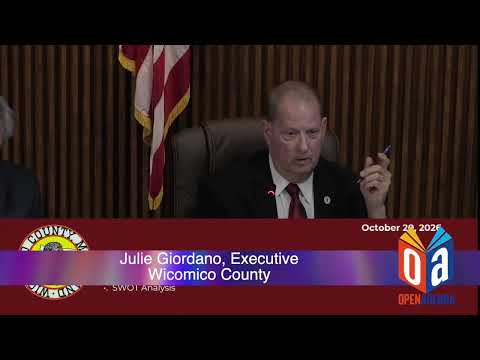
>> At no point ever has my administration
stated that we are against the property
at Conley Mill eventually becoming a
park. The decision to hold off on this
was done prior to my administration and
prior to this council.
>> In this email, lastly, the county
council is the reason they're talking
about Connley Mill. The county council
is the reason the property did not live
forward. I think they mean move. She
meant move forward as a park in 2021
before I took office.
This ecologically valuable site is only
used to mine dirt for our landfill and
will continue to be that at the
council's request. Now, this is a
statement saying that the council has
requested in 2021
that Connley Mill be nothing more than a
mining pit.
um couldn't be anything further from the
truth.
>> Go right into the records and you can
see that she did take it off, you know.
So, I think that's worth noting because
it does come up time and again. And the
thing is is that um also I I I've heard
her statements um that this will not
prevent Conley Mill from becoming a
park. But, you know, when I found out
about this, I went to the NRCAC meeting
simply to make sure that Connley Mill
Park was put on the strategic land plan.
That was my purpose for being there. I
had no idea that this plan was going to
be um pitched that day. But when it was,
you know, the words that caught my
attention, you know, um Adam Corey, he
said, you know, more than likely this is
the direction of beneficial dreads for
use for Wakcomo County. And Chris
McCabe, who was there, said
that we have 30 years of dredge storage
in just a portion of the lake. By the
way, that lake is beautiful,
magnificent.
>> And if you go into the record, that lake
was supposed to be the anchor.
>> They said, "We will dig the dirt to
create the water features, and all of
Wakamico can be proud and go there and
know that this wonderful place was
created and we made use in this other
way."
>> Yeah. Muel, thank you very much. Thank
you, Michael. Of course.
>> And I appreciate it. Look, we would we
want to get any updates. We know that
you're staying on top of this, so come
back and see us, will you?
>> Great. When we come back, we're going to
bring in Trish Melvin. We're going to
get her perspective as someone who has
viewed the county council meetings and
see what she has to say about Connley
Mill Park.
Welcome back to Open Agenda. In the
studio with us now is Miss Trish Melvin.
Thanks for coming back.
>> Mike Goldberg, thanks for sticking
around.
>> Yes, sir.
>> So, it was really interesting to get to
talk to Muel Dene. Um, I know you have
been very active with county council
meetings lately. she has in the last
year and a half, two years. Uh community
community advocacy is something both of
you believe in.
>> You had a chance to hear her talk about
her involvement with the park. Uh what
is your perspective on on someone who
has been active in the community here
lately?
>> Got a couple concerns about this plan
for Connley Mill. Uh based on what I
heard at the meetings and what Muel just
said. Um, one is, well, first of all,
when the waterways are dredged, uh, the
MDE, Maryland Department of Environment,
needs to test that sediment because even
if the water is pristine, the sediment
can hold on to a lot of contaminants
like PCBs primarily. Um, that testing
needs to be done before that spoils goes
anywhere. I don't know the last time it
was tested. I guess if it was dredged
four years ago,
>> 7 years ago,
>> seven years ago,
>> it was dredged four years ago, but that
was that that spoil was pumped directly
into De Island. It was a lower part of
the river.
>> Well, Adam Corey has indicated that
they've done preliminary testing. I
don't know what that means. All right?
>> You know, that's it's just a term, but
you know, it's a pretty long length of
river between downtown Soulsbury and
where it dumps into Tangier Sound. So
there could be different contaminants in
different sections of that river. So the
last section to be dredged was the lower
section and that material was all pumped
directly to Deal Island to do some
island restoration.
>> Um so what's my bigger concern is
probably the upper reaches of the Wcomo
where there is a history of
industrialization and point source
contamination. They're going to find
something there. um it it's not going to
be pristine under you know any
circumstance but my concern is even
though that there's a natural
impermeable clay layer uh at below
Connelly mill and even if you construct
clay liners or use geoexiles
to ensure that nothing is getting
through that in these impermeable layers
seismic activity over time um uh water
penetration can create fissures that
would allow toxic chemicals or
carcinogenic chemicals to reach the
paleo channel and the paleo channel is
the primary source of portable water for
most residents of Wcomakico County
there's no guarantees there but to put
it directly over our source of drinking
water it may not affect us 10 years from
now but could affect us 20 or 50 years
from now
>> you know from a soil science standpoint,
u you're taking, and this is where I
come from, uh you're taking dredge spoil
and you're leaving it at least near the
source that it came from. So, if it's at
Sharp's Point, it's a mile away from the
river. If it's on Deal Island, it's
within the the the boundaries of the
flood plane.
>> So, it's easily to say that, okay, if
there's heavy metals or other
contaminants in that sediment, that it
may be found there anyway. M
>> you're literally going to take heavy
metals that could be found in the river
and truck them 12 m away as the bird
flies into an area that's not prone to
that. Connley Mill Park is not part part
of a flood plane.
>> Uh this is hydrogeeology 101. Um this is
stuff that I would have taken my
freshman year in college.
>> U so why even take the risk? You might
be right that they could put liners in
and you might even be right that there
could be fissurers in later, but it
still just seems ridiculous to me that
you would even put yourself in that
position where you would let it to
happen because you have to work so hard
just to make it messed up.
>> Well, it it's it's rolling the dice with
people's health, but you know, this
could be years down the road. To me, the
the greater reason not to do this is the
cost and inefficiency. I mean, to truck
this material, you know, 15 miles away
from Sharp's Point, the Look, it it just
stands to reason that with literally
dozens of potential beneficial reuse
projects throughout the Chesapeake Bay
region, there's going to be all kinds of
ben beneficial reuse projects.
give the material away, but to actually
load it onto a truck and move it
somewhere else. And we've already
>> we we know what that cost is. The cost
is about $11 million just to move
300,000 cubic yards
>> minimally.
>> And that's the minimum and that's not
counting the force slash. So, you know,
this money has to come from somewhere.
Trish, I want to I want to circle this
back to the community outreach we saw
with 287G.
You know, we saw lots of folks from
different ethnic backgrounds speak out
against 287G, but we also saw a lot of
Caucasian folks who particularly
probably would not be affected there.
One of the arguments I've heard with
Colin Mill is that's somebody else's
problem. That's that's Delmare's
problem. That's the north side of the
county's problem. But folks came out to
speak out against 287G who who would not
have been impacted by its its effects.
Do you think people throughout the
county, someone from Fruitland, for
instance, should look at Connley Mill
Park as a case study of where government
has gone wrong?
>> Absolutely. I mean, I'm I'm interested
and I live probably as far in the
county, well, I live on the southern
side of the county and that's on the
northern side. Um, I would love to have
a park there. I would use it because
we're talking about credibility of our
county officials
and I have a lot of concerns as I
mentioned the contamination, potential
contamination. Um, another concern I
have is this topic of carbon
sequestration.
I spent months at one time in my life
working in a marketing effort to try and
make some claim about carbon credits and
carbon offsets and worked on it for
months. It came it went nowhere because
the particular government agency we were
working with would not acknowledge it.
>> Okay. And so when I hear carbon credits
right away just from that experience I
>> you've seen that you've seen the the the
card game of it just me
>> participated in the card game and it
went nowhere.
>> This is the capp and trade that you know
we've heard so much about and at this
point in time we know that the that the
carbon markets have collapsed. So we're
talking $2 maybe $5 per ton somewhere in
that range. Uh so whatever revenue that
the county executive believes is going
to be generated by the sale of carbon
credits is absolutely nothing compared
to the simply the cost of shipping and
processing all of this material.
>> And if I'm not mistaken those
calculations enter into the equation
>> what what what the emissions are for the
for the for the removal as well.
>> And I guess it depends on what program
that you're involved in.
>> Yeah. just from the financial. I mean,
try to order a load of sand and have it
delivered to your house. Tell them
you'll pay them $5 a ton. You're not
going to get your sand delivered to your
house. I mean,
>> you know, you you you asked Trish about
how you if you don't live there, does
this affect you? Well, it does from a
health perspective. If the Paleo Channel
does become contaminated, well, may not
affect us, but it may affect our
children or grandchildren. And who is
going to pay the tens of millions of
dollars that it will cost to transport
this material? That's going to be our
tax dollars. If you simply take a look
at it from an efficiency
uh perspective, this is the least
efficient uh plan imaginable. And when
it comes to the environmental
perspective, and I'm not just talking
about contamination of the paleo
channel, but when we have islands that
need to be restored, we have shoreline
stabilization projects that can take
place. Uh, you know, these are higher
and better uses. Why is this particular
plan been brought to the front of the
line? And I get back to my belief that
it's it's punitive more than anything
else. And if it was a benefit to the
community, it would be it would benefit
the whole county as well. So,
>> let's hold them accountable to the
promise that was made.
>> Amen.
>> Thank you both for your insight into
this. Thanks for watching this episode
of Open Agenda. We'll be back later this
week with another new episode.
>> You think you'll be able to edit out all
of our errors here? Oh,
>> yeah. mostly Trish's.