You're watching Open Agenda. Here's our
host, Joe White.
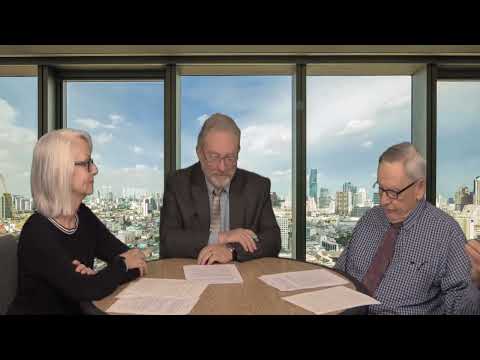
Welcome to Open Agenda. I'm your host,
Joe White. In the studio with us is Mike
Goldberg from Delmare. Thank you.
>> Yes, sir.
>> Mr. Jim Atkins from Ardella.
>> So, Governor Wesmore just had a state of
the state address and we don't normally
cover state politics here on this show.
Uh however, a lot of what he said, a lot
of the talking points will eventually
end up on our doorstep here in Wakcom
County as we go through the budget
process, which just so everyone knows,
the fiscal 27 budget is due, it starts
July 1st. It's due by the third week of
June, but it's going to be rolled out by
the county executive in in April. Uh you
would think that now that we have the
audit back from fiscal year 25 that you
know, these budget processes are are
going on now. uh we're we're going to
hear about it here in about another two
months. There's going to be some
questions raised and we still have 60
days of the general assembly session.
>> So, we got a long ways to go. What I'd
like to do is bring in Dr. Joe Venosa
and I want to break down the state of
the state address uh with Mike and Joe
and then Jim, I'd like to bring you back
in because as many meetings as you
attend, there's going to be questions
that come up and I want I want the folks
out there to start thinking about what
concerns they should have so they can
get addressed. I mean, these can be
solved, but we we need to get it out
there. So, stay with us. When we come
back, we're going to have Dr. Joe Venosa
in. We're going to talk about the state
of the state address.
Welcome back to Open Agenda. In the
studio with us now, it's Mike Goldberg
from Delmare. Thanks for sticking
around. Of course, Dr. Joe with
Salsbury. Thanks for joining us.
>> Thank you.
>> So, we have we've talked in many
episodes in the past about what the
anticipation
residents here in Wakamaku County can
expect as we get into budget season.
We're not far from it. We're about two
months away, but specifically we saw the
Governor West Moore state of the state
address and I know that we all feel like
there's a lot of impact that's going to
come down from the state in the last 60
days of the of the session.
>> And I want to talk about a couple key
points he he brought up in his state of
the state address. Um first, I mean, he
let it off that he's not looking to
raise taxes or fees. Um and we still do
have a structural deficit. We are going
to prove that we can do more with less.
So once again, I've introduced a
balanced budget with a general fund that
is smaller than the previous year. And
in a moment when prices are going up on
everything, our proposed budget does not
raise taxes or fees on the people of
this state. I mean,
>> what how do you feel like we're going to
bridge bridge that deficit?
>> He may not be raising taxes and fees
again. you know, this this particular
year, but they're already very high. And
if you're going to not raise taxes and
fees, which I do not advocate for
raising anything, but and you are you
are expanding
spending on a wide variety of
entitlements, then there's going to be
other items that are going to have to be
reduced.
>> Okay? And you know, one of my biggest
concerns is is that the funds that will
flow from the state to Wcomamako County
are undoubtedly going to be reduced. I
think we can expect a diminished
disparity grant and other grants that we
we don't know what they'll be. It could
be education, it could be parks, it
could be anything, but they're going to
have to stop spending so much.
>> Well, Joe, we we've seen that the the
state has come out and said that they
don't expect to to slash our disparity
grant for this year. That was yeah that
that was our big fear as of right now.
That is what they said. But keep in mind
you know the state and in particular the
governor's office and their budget
proposal. That's just the starting
point. Uh you know there is two other
branches of the state government that
are going to have their say as to what
gets cut, raised, what have you. So I
expect those numbers to change. But it
is reassuring at least that at this
point they are trying to reassure um the
counties that those disparity grants are
probably not going to be touched. But
again, we don't know the final number.
>> I don't feel reassured personally at
all.
>> Well, let's say Mike is correct and
there's an adjustment to our disparity
grant or just state funding for teacher
pensions because they I mean they
slashed years ago half of that and they
could be coming after more or the rest
of it. M
>> uh how would the county approach that in
their budget process cuz that's supposed
to come out in April.
>> Yeah. Well, the county is go well and
again I I think this is something that
um other council members have talked
about before and and obviously we've
addressed it um many times on on the
show is the fact that just structurally
in Maryland, the counties have
increasingly had to dip into their own
reserves and their own funding apparatus
to pay for things that are mandated by
the state.
uh we could call them unfunded mandates
to some extent or new obligations, but
that is something that is not going away
and is going to increase. Um and part of
that challenge is that so much of the
budget, I believe 84% of the Maryland
state budget is mandatory spending. So
there's actually very little
>> there's not a lot of wiggle room.
>> There's not a lot of wiggle room. And
and you know what we al also don't
realize is the cuts that do come to the
county via our increased obligation
elsewhere are also coming with state
cuts that do affect local things. For
example, you know, one of the big things
that I've always been an advocate for is
disability services. The governor for
the last two years has proposed pretty
drastic cuts in disability um funding
models for at home um care workers. So,
for example, if you have uh a relative
or child or someone who has a severe
disability and you are their primary
caretaker, there's a funding apparatus
to help you. Well, those funds are in in
jeopardy now. In fact, the governor's
budget has proposed, I think, $150
million cut. So, we're already facing
cuts that affect people locally. Mike,
you you and I watched the state of state
presentation and one of the things that
Governor Moore blamed was the federal
government cutting 25,000 federal jobs
who of folks who live in the state of
Maryland.
>> Because just in the past year, the
federal government has fired around
25,000 Marylanders who have federal jobs
in our state alone.
Our neighbors,
our friends,
our family.
It's the biggest federal job cut of any
state in the country
where the president's domestic policy
agenda could kick up to 180,000
Marylanders off of healthcare.
More than 680,000 Marylanders could see
their food assistance taken away.
>> Maryland obviously is being
disproportionately affected by the Doge
cuts. I for one support the Doge cuts.
Um Maryland for decades has been
dependent on revenues that are generated
by our proximity to the seat of the
federal government. uh a lot of the
federal contractors and uh and there's
you know ancillary or collateral
industries that are completely dependent
on on the the uh on the revenue
generator that is the federal government
>> and they have relied on that and
meanwhile with regard to the private
sector you know they've imposed um very
stringent and expensive regulations and
high taxes so Maryland has not been a
good place to bring a business to start
a business or to operate a business.
>> Yeah, I I would I would echo that. I
mean, as a business operator, uh if if
location wasn't, you know, you could
locate anywhere. The state of Maryland
right now would not be the epicenter of
where you would want to go. Maybe a
particular spot, you know, whether
you're agriculture or shipping or or one
of those types of, you know, where
location really does matter. But uh but
the state itself all all cars on the
table isn't
>> by and large there's a fundamental rule
of economics and that's that capital
flows to where it can make the highest
return on investment. And I'm sorry when
you have you know high taxes, high
expensive regulations, that's not where
you're going to make your best return on
investment. You're going to bring that
business someplace where your operating
costs and taxes are going to be cheaper
so that you can maximize profits for
your investors. Well, I think there's
there's two ways to look at it because I
I I think um both things are true. I
think for example, Maryland has and
again, you know, for for my own view,
I'm totally against the Doge cuts
because we already have a really low
percentage of federal workers relative
to our population. You know, we have
less workers now in 2026 than we did in
1970, even though we have more than
basically 100 million people. So, we're
doing more with less anyway. But to your
point, um, Maryland compared to, let's
say, Virginia, right, which also relies
a lot on a federal workforce and on
those ancillary businesses, uh, they've
been in a better position than us
because even though they too have been
decimated by federal cuts, they have
more of a backs stop, which is a bigger
business base to withstand those cuts
and to theoretically bring in other
businesses. So if you just compare
Maryland and Virginia by the by the
metric of federal action, you can see
two things. Federal action has been
detrimental to Maryland. But to your
point, when you don't have an attractive
business climate, whether it's the fees,
whether it's the the the the broader
costs of just opening a business and
operating it, it does put us at a
competitive disadvantage. and and we've
never really figured out up until now a
way to really change the tide uh to to
kind of get out of our structural
deficit that that is now I think we all
would agree it's it's a feature it's not
a bug every year we we we come to this
point of we're a billion over
>> well 1.5
>> 1.5 or what have you right I mean so
>> until that's addressed the federal
government drama is always going to be
there and it's probably going to get
worse before it gets any better.
>> Okay, here's something that is is
self-made. I mean, the the rising cost
of of energy here in just in the state.
>> Sure. Yeah.
>> I I thought it was a little bit
disingenuous that Governor Moore said,
"Well, our our energy bills have gone up
the same as they've gone across the
country."
>> Since this time last year, energy prices
are now up 13%.
The price of beef is up 19%. The price
of fertilizer is up 15%. And I just want
to be clear, that's not in Maryland.
That's nationwide.
Those are the numbers across the
country.
>> U Maryland has surged ahead uh in in the
increase in spending.
>> Look, I can only look at my
my own electric bills. Um in one year,
it's it's been a quite a substantial
jump. And look, I've I talked to people
in other parts of the country. Their
costs are going up but nowhere compared
to what we've experienced in Maryland.
>> But the the effect here in Wakcomo
County is how many thousands of hundreds
of thousands of square feet do we have
to supply energy to to board of
education buildings, government office
buildings, state highway, civic center.
So there's there's there's going to be
that component in those departments
budgets. Oh yeah.
>> So even if they see an increase in their
budget,
>> that increase may just get you enough to
pay the electric bill. Yes. Yes. And
I've seen that in the private industry.
And it's just go to what Mike was saying
earlier. We've we've we've the state has
gotten us in a position where it's hard
to be competitive even for ourselves. Uh
and that's not counting the increase in
uh payroll tax. I mean, one one of the
things the state of Maryland instituted,
it it came out last July 1st. Uh it
doesn't actually start until this July
1st, but we've all been paying it for
the last six plus months. is an extra
4/10en of a percent of payroll tax
that's paid by the employee
>> and 4/10en of a payroll percent of
payroll tax paid by by the employer
>> for the sick leave.
>> And this is different than just the five
days that folks earned
>> with the the the it's still in place
that sick leave policy as well. But this
is going to work like unemployment where
people can apply for up to 12 weeks a
year of sick leave. But it's also
costing employers. One of the employers
is board of education.
>> Um we're we're going to have to account
for that because you're going to have an
increase.
>> Well, it's not only is it costing the
employers, but that also means that
there's less money in the pool to give
>> employees raises or other benefits.
>> You know, money is a limited resource.
And you know the the way we're spending
it in Maryland where most of it is going
to some type of entitlement. Let people
take care of themselves. Cut their
taxes. Let them make decisions with
their own about how they handle their
own money rather than having government
make those decisions for us. This is the
age-old battle between, you know,
conservative and liberal. I I
understand, but as a conservative, I
want government out of my life. Well,
one of the other uh topics he brought up
was public safety in the and he used it
in the vein of of ICE and uh outlawing
287G agreement.
>> I want to thank you all for introducing
legislation to protect Marylanders
from the unconstitutional actions
of some federal agents this session.
Working together, I am confident that we
can take meaningful steps to hold
federal agents accountable for violating
the Constitution and help those who have
been harmed to make sure they also get
their justice. The people of this state
have come to learn that I have no
patience nor tolerance for violent
offenders
and our extraordinary men and women in
Maryland law enforcement
will continue to work with federal
officials when it comes to getting
violent criminals off of our streets.
So, this is something that's going to
come up with the county. Yeah. U we
probably are, according to county
executive, probably going to join a a
class action lawsuit within the state.
>> So much for conservative spending.
>> Well, I mean, the understanding right
now is the lawyers on on the side that
would fight it would be pro bono. Now,
of course, if they lose, then there's
the chance that we would be responsible
for the state's portion of their
defense.
>> Yeah. Uh whether you agree with ICE,
whether you agree with 287G agreements,
do you think Governor Moore has an
understanding of of what these laws are
going to do and how that's going to
trickle down into a county like Wakamaku
County? Well, again, there's so many h
not hypotheticals, but there are so many
variables that are at play here because
there's a real debate um right now, you
know, that some are are saying, you
know, if we get rid of 287g, it's going
to lead to a surge of ICE activity
>> that will
>> we've been told that,
>> but but the reality is like nothing is
going to prevent ICE enforcement from
happening, especially with the massive
amount of money you talk about spending,
you know, the $30 billion dollars that's
being pumped into these federal agencies
that is going to require them to
basically be in many places regardless
of what the counties do. So, I don't
actually think there's much of a
correlation between what federal
immigration policy and the actual
activities that you're seeing in some
places and what the counties are doing.
I think it is debatable. Look, I mean, I
don't think anybody is against getting
somebody who is an undocumented
uh individual who has a criminal record
off the street, but I but I do think
from from my perspective, the the thing
that I that I do have concerns with is
that it opens the door to a lack of due
process because you could just be, you
know, put in county jail and then you're
not even adjudicated, right? That's
>> but again, we we don't know. We've
talked about we don't know what the
fiscal ramifications of having more
people in our detention center will be.
>> We don't know that. And again, this goes
back to the fact that the budget's not
even finalized yet. And so part of that
policy I think we we talk about the 27g
issue as a political moral issue, which
it is on many levels, but it is a fiscal
issue too, especially when you factor in
like liability. And now when you're
throwing in lawsuits, it adds all kinds
of numbers that we don't really know
yet. Do you feel like he's he there's a
sense out of Annapolis of what we're
facing here in our own county? And do
you think our own county
>> is prepared to face what the state is
>> possibly rolling towards us?
>> I I don't think the county is prepared.
I I really don't. I don't think the
general assembly in Annapolis, you know,
is prepared. I don't think they fully
understand
um the consequences of their policies.
two billion dollar deficits I think you
know going forward every single year you
know and into the foreseeable future you
know only thing you can do is raise
taxes or cut spending but they're not
they're more far more likely to raise
taxes than they are to cut spending
>> I um I think the shore just by virtue of
population is is always going to be put
on the back burner not even a political
issue because even Democrats from the
shore will tell you that
>> um we're at a disadvantage of population
and wealth. We we're not in the
Metropolitan Core. That's that's just
the nature of
>> we don't have enough votes here on the
Eastern Shore to really
>> financial influence.
>> Yeah. Or financial influence and Yeah.
Yeah. which is often correlated. So So
that's just a that's an issue that we've
always faced and it will get worse. But
but the thing that I think people aren't
fully taking into account and this is a
conversation that applies to both our
county executive and the governor
frankly and all executives in the state.
So many people are running right now for
that second term
and the wheels tend to come off at the
start of the second term and it's
getting through the end of the first
term where where where the senator Well,
and look, this is why the governor is
never going to say that we're going to
raise taxes the year before the
election. It's the same reason why, you
know, I'm probably as a state worker
hopefully might get a 1 or 2% cola. You
know, like we we joke that we actually
call it the election year cola. here's
your pennies now because it may not come
the year after.
>> Okay?
>> And so there's a lot of posturing just
because it is election season. So the
promises whether it's the executive is
making in her budget or the governor,
>> promises from a politician, especially
one who's been in office for more than
one term.
>> Yeah.
>> Those promises and two bucks will buy
you a cup of coffee. Well, there's an
old expression, right, that that it's a
it's a fact that nearly every first term
politician spends about 1500 days
thinking about a second term.
>> Okay. Mouth.
>> Well, thank you both for your insight.
What I want to do is I want to bring in
Jim Atkins because really at the end of
the day for Wakcom County, we need to
have our citizens ask good questions as
we go through this next budget process,
understanding the state challenges, but
also understanding that it is an
election year here in Wakcomo County as
well. Yeah.
>> So, Mike, will you stick around?
>> Sure.
>> All right. So, stay with us. When we
come back, we're going to bring in Jim
Atkins. We're going to ask him what
questions we can expect to be raised
during budget season.
>> Welcome back to Open Agenda. Back in the
studio with us is Mr. Jim Atkins from
Mardella. Thank you.
>> Mike Goldberg from Delmare. Thanks for
sticking around.
>> Yes, sir.
>> So, we had a chance to to talk to Dr.
Joinosa about the governor's state of
the state address and uh you know
ultimately we're we're concerned how
this is going to affect Wakamaku County
and Jim you have been attending almost
every county council meeting now for
several years u you've seen this budget
process in non-election years and we're
going to have we're there's going to
have to be some debate there's going to
be some give and take. We've already
seen the capital improvement plan come
out and it's got some pretty
extraordinary numbers in it as well. How
do you think this is going to roll out
and and what questions will you be ready
to ask?
>> Well, I think the the biggest thing that
I want to know is can we separate what
the county has to have the necessities
from the wish list.
>> Okay.
>> And uh you know, we've talked about it
before. One of the biggest things that
it's not in the CIP because it doesn't
need to be are these uh EMS chase units.
>> Okay.
>> And you know that's a uh that's probably
a five 5 million $6 million
item that that we're looking at getting
and that has to be addressed. That's a
necessity.
>> Okay.
>> The school security systems are
necessities. Well, and there's a capital
component to that and an operating
>> and an operating and and it's going to
go away. We've got the uh the uh
collective bargaining for the FOP going
on right now that we don't have a clue
what that's going to cost. So, we we've
got to plan for the expenses that we
know are coming that we're going to have
to pay. And if there's money left over
in the county after that, then there are
some projects that we can address, but
those projects should not be on the top
burner.
>> Well, and and I think we all would would
support making sure our sheriff's
deputies are are are well funded, well
paid, right?
>> Uh that that these FOP negotiations, we
saw this two years ago, they actually
got completed late.
>> They got completed late
>> and which would be in May. and and and
by May, we're only 30 days away from the
budget needed to be ratified. Right.
>> 30 days.
>> Mike, talking about accounting for
numbers, uh I was actually just at the
Delmare Town Council meeting uh this
past week. And Delmar High School is
actually putting in the weapons
detection system in their high school
cuz that's part of their independent
school district.
>> Ironically, the elementary school is in
the Wakam County school district. When
you hear things like $1.6 6 to2 million
for weapons detection systems on the
capital side, possibly4 to $4.5 million
on the operating side to pay for the
additional staff to run these machines
to get the kids in and out of school. uh
when when you also watch West Moore's
state of the state and you know that
we're going to have some unfunded
mandates, where will you start to
prioritize or how should someone that's
doesn't go to every county council
meeting prioritize some of these uh
these projects?
>> In my opinion, public safety is the
number one imperative of government. So,
you know, I I certainly advocate for the
weapons detection systems. It's a shame
that we have to have that. When I was a
kid, we didn't have to worry about such
things. Yes, we have to spend the money
on this and it's dog on it, it's a waste
of money ultimately because only to the
extent that we have to deal with so many
bad people today that we didn't used to
have to deal with. It it's unfortunate.
Public safety job number one of the
government. You know, for the federal
government, it's protecting our shores
and you know, for the county government,
it's protecting our schools and the
general population from crime. Jim, in
the last segment, we talked about energy
bills and uh that that's going to affect
every department.
>> Uh even the government office building
itself. I mean, this there's no way that
that's costing the same amount to heat
and air condition as it did 2 years ago.
>> No, that's in that's increasing. And
there, you know, they're talking about
these AI buildings that they're going to
need and how much energy they consume.
And there there's a problem somewhere. I
mean, we want to talk about the state
wants to talk about 5% of the farmland
needs to be converted to solar energy.
No, I'm sorry. If you want to put a
regulation in there, put a regulation in
that every industrial building
has to have solar power on its roof to
power that building or at least
partially building. Put solar just like
you got it at at Warwick. Put it in the
parking lots. Cover up the parking lots.
Don't cover up farmland in this county.
>> I will say I like that better than
covering farmland. But if you do
regulate that any new commercial
buildings have to have solar, you're
increasing the amount of money it's
going to cost to bring business in. You
are
>> and that may prohibit especially with a
county that the the the cost of living
here is lower than it is in Baltimore. I
don't believe that the alternative
energy generating schemes are um are
really viable at this point. I don't
think the technologies are there. Every
solar panel that goes up, you know,
whether it's on a business or on a home,
is already subsidized by the federal
government. It costs more to generate
electricity through solar or wind than
it does through more traditional forms
of of energy generation. One of the
problems we have here in Maryland is
that our domestic energy production by
traditional means has been reduced. We
are relying on energy that's actually
generated outside the state
>> most of New Jersey and Pennsylvania.
>> Pennsylvania. Yes. And you know we need
to be looking especially with the advent
of artificial intelligence and the the
enormous energy demand that that's going
to create and we do need to move forward
with that or we're going to be behind
the eightball. So we have to look at
viable alternatives and locally here
we've been dealing with the offshore
wind. It costs four or five times more
money to generate electricity through
offshore wind turbines than it does
through an gas or you know coal or oil
power generating station. But how many
years have we been talking about this? A
and yes, that's not the best solution.
Solar and wind, but every time you start
working on something, the next
administration does away with it. So
then you're back at ground zero. We've
got to do something. And we can't this.
You talk about kicking a ball can down
the road. That's all this is. We're just
kicking a can down the road. And when
you sit here and look at Wakcomo County
and people look at their electric bills,
there's something going on
when you have a person
with Delm Mara Power paying the amount
of money that they're paying for monthly
electric versus a person who is with
Chop Tank Co-op.
>> I can say I'm a co-op.
>> I am too. Things have gone up minimally.
>> Yes. And when I look at when these
people on Delm Marva tell me what their
electric bills are, I just shake my head
and wonder what is going on there.
>> A year ago, the county council was
supposed to have a work session with
Delm Marva Power and it got cancelled by
Delm Marva Power at the last minute. I'm
disappointed to see that it hasn't been
rescheduled and uh I'd like to see that
be a priority. Not that because the
county council is going to be able to
somehow regulate Delm Mara Power, but
force Delm Mara Power to be much more
transparent with our elected officials
and the public here about exactly how
they're coming up with the rates.
>> Well, it's it's another example of as
time has gone on,
>> Del Marva Power for us older people,
DPNL
>> Mhm.
>> was a local company.
>> Yeah. They were paid stock.
>> It took care of its local people. It has
been bought, swallowed, bought,
swallowed till now as a, you know, a
company that doesn't care about Wakcomo
County or the Eastern Shore at all. All
they care about is their bottom line and
the money going to the stockholders
>> and there's less competition. You know,
when you have these utilities, you know,
it's you got one electric line, you're
not going to have 10 different companies
offering service over it. But
>> and and that's where a lot of the
increases come from the distribution
charges uh or I'm sorry the well the
transmission charges not the generation
charges. So and and in Maryland we have
deregulation on generation
>> charges. You can go out find your own
supplier but the the distribution how it
gets to your house.
>> That's where you get hammered
>> and and that is that is a regulated part
of the utility still and I don't believe
I mean I I watched Governor Moore's
state of the state. I just don't believe
they are doing their jobs to make sure
that that our interests are protected.
So then Watcom County is forced to kind
of do it for themselves.
>> I don't think we can look to government
for innovation with respect to, you
know, cheaper energy. This is something
that needs to be left to the private
sector. Take a look at the oil industry.
Where was the government involved in
developing the oil industry? you know,
at the turn of the century, you know,
there was a couple of, you know, oil
companies and in in Texas and and uh now
there's a gas station, a private sector
gas station on every corner. These are
not government operations. Let's unleash
the power of the private sector to solve
these problems and get government the
heck out of it because government can't
do it.
>> Well, one thing we know for sure is
we'll be there. will be watching and
asking questions and we we definitely
encourage everyone else to do the same.
>> So, thanks for watching this episode of
Open Agenda. We'll be back later this
week with another new episode.