You're watching Open Agenda. Here's our
host, Michael Langford.
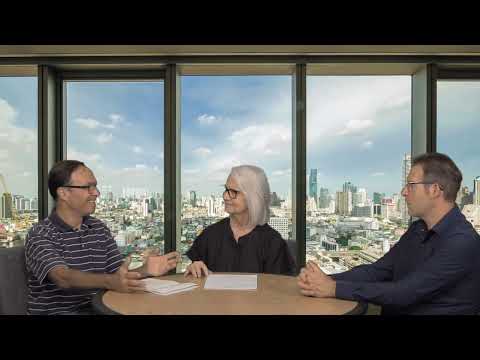
>> Thanks for joining us on Open Agenda
this week. I'm Michael Langford, your
host. With me in studio, uh, is Mayor
Randy Taylor from City of Salsbury.
>> And Michael Peronsky, uh, also from City
of Salsbury, uh, chair of the parks
advisory committee for the city of
Salsbury.
>> Thanks for having me. Uh Randy, uh we
are starting to break ground on new
projects and opening new parks for the
first time in 10 years. Can you tell me
um where we're at, how we got there?
>> I would say it started about a year ago.
We kind of went through a little
inventory where we were on a lot of
these parks and the first improvement we
made, I think, is at Dodale. Um we, you
know, redid the the the uh playground
equipment there, which was a a big plus
for that neighborhood. We started then
did some work over at Lake Street which
was also an ad and uh started some
programs with April Jackson. President
April Jackson's running some programs
over there. The most recent of which is
uh now um Woodcock Park if you've seen
that in the in the Facebook postings
we've had. But we're replacing all the
equipment. That's a that's a playground
that's been there for, you know, a
couple of generations at least several
generations. It's been a big part of
that neighborhood, which all playgrounds
are. Neighborhood based playgrounds are.
and they're a vital part of keeping that
community healthy and attractive for
homeowners and renters alike for kids in
general. Um and then the last uh most
recent is the Wateride Park which has
been a long overdue project which
President Jackson is very much um glad
about. Um we're making some headway.
We're ready to build a two two member um
bathroom with an awning so they'll have
some indoor space for undercover space
to enjoy the playground in that area. So
for which we're going to do a community
center down the street which is going to
be another act called the West Salsbury
uh community center. So we're making a a
number of investments I think
strategically um to help support
neighborhoods and kids.
>> Awesome. In the city.
>> Yeah. It sounds like people could um I
guess they'll be able to through the
city like rent that space at Wateride
Park in order to do like a celebration
whether it was a church or a family or
whomever.
>> Birthday parties whatever they want.
Yeah.
>> That's wonderful. Um,
Mike, turning to you, um, your focus on
the parks, the parks committee, um, you
know, I I know in that advisory role,
what are some of the things of where you
want to see us going?
>> Um, well, I just want to, uh, applaud
the mayor for, you know, taking the step
to, um, ensure that we are continuing
to, um, fulfill the promises that we've
made to different neighborhoods. So, the
Wateride Park uh is a great example of
that where for a long time we've
committed to making improvements to that
park and um we've just not seen a lot of
results. Uh we've gotten some
incremental steps along the way, but I
think this is a a real transformational
moment where we're um we're making a
serious investment not not just in the
park, but in in the neighborhood with
the addition of the community center. Um
the great opportunity there is that
we're really going to transform that
space into what could be um a
recreational hub where uh people can go
and they can do all types of different
activities. Um it's not just going to be
basketball courts anymore. There's going
to be um I think down the road hopefully
what we'll see is a lot more
recreational opportunities in that
neighborhood. Um, and I think that's
what uh I'm most interested in um on and
our committee as a whole is most
interested in is how do how do we expand
um access to recreational opportunities
for everyone that lives in our
community. So, um, we look at it sort of
holistically, not just, you know, does a
park need, um, um, sort of an update,
but how are we making sure that the
parks that we have and the amenities in
those parks are serving the whole
community. So,
>> yeah, agreed. I think one of the things
that I've tried to transition from an
administrative standpoint is is that if
you guys need something, if it's a $500
thing or a thousand dollar thing, if
it's a lighting thing, if it's putting
nets up at a basketball court, that
that's something you just pick up the
phone and we make provisions some
somewhere somehow we make a provision
just like we were talking about over in
your neighborhood around your basketball
court. You know, those are little
incremental things that make a
difference to atrisisk kids all across
the city. I mean, I was one of those
kids. I I I fortunately went to the Y as
a kid, but had I not had those places to
go in the summertime, you know, they're
recreational, swimming, basketball,
outdoor, for me it was tennis, but you
know, it's a thing where you can't re
you can't replace that in a kid's youth.
And so where where wide is um it's near
Petan, it's the school, Petan, the
apartments, uh Wateride and Mitchell
Landing, all of that's right there. So
in the summer months you'll have, you
know, an outdoor park plus you'll have
the community center to support those
kids. And I think that's uh and make it
also accessible to the adults as well.
And so absolutely that's what we're
hoping to make as well.
>> Yeah.
>> So um so question for you. Um what about
uh I've heard about Northprong Park. I
know this is more further out, but isn't
that like they're cleaning up uh
brownfield sites?
>> Yes.
>> How how does that work? So, we're we're
uh we've got a number of conceptual
designs. We've actually picked up an
some additional property, which we'll
we'll know more about going forward um
on Lake Street. Um and we've got a
number of options to do there. But one
of the first things we're going to do is
we're going to screen it in. We're going
to and begin to demo the site so clean
it up.
>> It's just sort of sat there for like 10
years, more than that, um as these
little acquisitions have occurred. Um,
so we're hoping to by the end of the
summer have it cleaned up and and and be
in a position to begin to build back.
>> Okay. Are the um is that that cleanup
the the funds for that is that coming
from the municipality or is that coming
from the state?
>> It's coming from a brownfield site
>> federal government. I think there's um I
think the actual number is about $1.7
million. Yep.
>> From the federal government uh to
remediate that brownfield's location. So
really what they have to do is remove
structures from the site and then remove
um uh layers of top soil
>> uh
>> 2 ft
>> 2 ft of top soil um to remove and then
do extensive testing for quality
assurance testing to ensure that they've
removed any contaminants from the site
and then they can add back to it back
fill.
>> Yeah. So that process I I believe the uh
the city has to complete work on that by
2027, middle of 2027. So
>> okay.
>> So really I mean that park in earnest um
is probably close to four four years
away in terms of actually seeing a
completed project there. Um, and now is
really a great time for us to re-engage
uh the community adjacent to that uh
site to begin to uh hash out um the the
types of amenities that the neighborhood
wants to see there and how can we serve
broader goals like environmental justice
goals, habitat restoration goals um to
improve not only air quality um but
water quality in that area. Um there's
some really interesting work that has
been completed in other parts of the
state where they've taken industrial
areas um like the Baltimore Harbor and
and um created habitat there and you're
seeing um you're seeing wildlife return
uh and and making positive contributions
to the Yeah. you know to
>> distressed waterways. I I think one of
the things we're we're doing, we're
trying to incorporate across Isabella
over to the Johnson's Dam property,
which by the way is just going out to
bid now. So, we're hoping this spring or
spring to fall, we're going to be doing
the Johnson's Dam repairs as well to get
that another project that's sitting on
the sidelines for like seven or eight
years. So, that that'll be forefront and
we'll get that done. But, that's a
beautiful side of town. if you've ever
walked back in there, you know, the
city, you know, we just have not never
taken advantage of that site as a as a
site for a potential park space or or,
you know, for a river walk.
>> Yeah. There's um the one of the really,
you know, kind of one of the things that
I think our committee uh can do more of
is introducing people to um different
parks and different assets that are
incorporate incorporated into the parks
umbrella. So, when you talk about
Johnson Lake, um the new there's a
number of neighbors over in the New Town
area that use that lake for recreation,
but there's also the Rose Street boat
ramp. Yep. that is a city property and
it's a um
>> underutilized
>> underutilized um and there's some you
know I don't know exactly what the uh
opportunity is but there's certainly
opportunity there to um bring people
together to enjoy the water uh and enjoy
that tremendous asset that we have here
in the city.
>> Agreed. No, I think that um a lot of we
do have a lot of great parks in the city
and I think that uh it sounds like the
utilization of those. I mean, a lot of
times when I when I've met a lot of
people that come into the area, people
are like there's nothing to do or
there's nowhere to go. And I often speak
to like parks, even parks like Peton
outside of the city, but in this area
like there's just a lot um that people
can do, but it's maybe not presented as
such. So, it's like maybe there's a
public education component of um and and
just kind of like a little that people
even know that that's there.
>> Well, I a meeting I just had this
morning. This is an example of the city
park. Um if you look at the city park,
you know, where is the entrance to the
park? There really is no pronounced. So,
we're working on is a pronounced
entrance to the park, you know, with an
arbor that kind of celebrates our
history that designates our tells our
story with a brricked entrance way that
comes to a landscape in addition to the
pedestrian bridge which again went just
went out to bid and we'll get ready to
restore that as well.
>> Wonderful.
>> But the whole idea being is that you
know the the park is sort of nondescript
from the standpoint of entrance and
enjoyment platforms. it should be much
more um elaborate in that regard.
>> One of the ways we can get there is
really by strengthening the connections
between parks and neighborhoods. So
that's where that's an area where I see
we have a lot of opportunity for
improvement in that
when you go to Woodcock Park um the
ribbon cutting is this Thursday
actually. So, when you're there there at
the ribbon cutting, uh I encourage you
to think about Okay.
>> Yeah. Well,
>> um I encourage you to just do a 360.
>> Yeah. So uh and and look at the area
where how the neighborhood how children
in the neighborhood will access the park
and think about things like crosswalks,
lighting, signage even um in the
adjacent streets that um that both
direct you to the park but also make
sure that you can get there safely. So,
and that's where um I think a a renewed
focus on um pedestrian safety in
particular to access to these park
resources because,
>> you know, as much as we would like to
think that people respect the um
neighborhoods, not everyone that drives
through the neighborhood lives there.
So, when children are are playing and
going to the parks,
>> you know, we need to make sure that they
get there safely. So, um, you know, if
you take, for example, access to SU from
the neighborhoods, there's there's, um,
illuminated signs, crosswalks, there's,
you know, all kinds of signals that that
alert you to the fact that there's
pedestrians in the area. Um, I don't
know what how to what level we need that
in the neighborhoods for our parks, but
I think we we can do a much better job
of, you know, connecting even just
something as simple as a crosswalk, you
know, sign signals to people in the area
that, hey, look, this is a this is how
you get from point A to point B. I'm
glad you brought up the subject of
lighting because in the city park
project that the second or the primary
phase of that is doing park lighting
which we've never really adequately had.
I mean the lights are there.
>> Yeah.
>> So we'll be really doubling up the
number of lights the amount of looms
that are going to be cast over. It's
going to be an armed base light which is
going to a V, you know, Victorian style
that cast on the path. We'll be
uplighting the trees with with some
consultive, you know, respect to the
bird life and other things. So, we'll be
uplighting some of the the trees in the
park so that like the the park in
general will become much more lit and as
a result make it much safer in my view.
>> Yeah. I'm I'm a person who um you know I
I've lived out in the country before,
but like running like College Park
apartments, I have it lit up with LED
stadium lights at night. It's not it's,
you know, maybe that's not the best
thing for the birds, but it is the best
thing for public safety. And if you want
people to utilize a space, they're going
to have to feel like it's safe and and
and being well lit is part of that.
>> Yeah. Well, I like more of the warm
3000K
lights, but yeah, I guess you said of
the LED, but but but at the end of the
day, I think it's should be a romantic
light, but well lit is at the same time.
And I think if you look at what people
have said that they want for the city
park, lighting and public safety in
general, but lighting is a is a primary
one and um I'm glad that it's getting
done and I wish it didn't take, you
know, the better part of a decade to get
there, but we are we're reaching that.
>> I never understood when I looked at the
plans, I was like, well has this taken
so long? We, you know, we've earmarked
it.
>> It was in the CIP many years ago.
>> Mhm. and it went
uh it went out of the CIP and there was
really no reason for that because the
project wasn't done and the priority was
still there.
>> Yeah, I get it.
>> And it was even documented in the city
park master plan. So, it's exciting that
we are getting back to that point where
we're identifying priorities and
actually accomplishing them.
>> Well, a couple things. So, we're not
only putting the lights back, we're
doing the uplighting, we're doing the
bridge, and we're now doing an entrance,
which I think is going to be one of
several. We're going to try and operate.
The first one being sort of the the
demarcation standard of how we're going
to enter the park, the park park. We
have one from East Main as well
eventually, but for now, we'll start
with this sort of as the model, as the
entrance points with a brick entrance,
and it'll be tiered so you can walk down
with without just going down a hill. Um,
>> but that'll be all those and I think
>> accessible.
>> Yeah. And I think there's, you know,
through Greater Salsbury, we're going to
be partnering with them hopefully to do
some more exciting things with as it
goes to Picnic Island and the annual
Christmas lighting and all of that,
which is a lot of interest. So, we're
just trying to throw all those resources
into one bucket and and get it moving
forward.
>> This all sounds great. A lot to look
forward to in the future. Um, so my
question to both of you in turn is um
how can people get more engaged like as
far as if they want to have a say in in
these plans if they want to make an
improvement to the parks um how can they
connect with the city and do that?
>> Well, for for as the mayor's office,
you're you're welcome to write me
anytime through email or just tell the
mayor attend a council meeting is
another option. I think I think the
important part is that you listen I I've
got a really really good team and our
executive team and and now our projects
team is just really working well
together. We are trying to full board
get all of the the projects that we can
that are funded you know under
construction and in way along the way.
There is no grass growing under our feet
in that respect. So we're trying to do
what we can. We can't do it all. Um
we're trying to do more in the way of
infrastructure. We've done a million
last year. We'll do another million this
year, more than we'd done over the
normal budget
>> uh to get that stuff done because we
were way behind.
>> Yeah.
>> That all said, uh in terms of if you're
willing to help, join the committee. Um
let us know where you're thinking, what
your expectations are, but recognize
that we're not your enemy. We're we're
your friend. We're trying to do our part
to make the city better. So,
>> that sounds great. Um and in terms of
you know we welcome anyone that uh wants
to join the parks committee. We complet
we totally welcome new members. Um and
uh we are meeting by monthly on the
second t uh second Thursday of the
month. So our next meeting uh is in
April. Um and uh uh one of the ways that
we're uh hoping to make a just a small
contribution to the parks is by updating
the gazebo at the Boundless Playground.
Um it's uh parts of it are in are are
fine and other parts of it. So the main
structure is is in good shape, but the
railing and the bench is in disrepair.
So, that's going to be one of the
projects that we complete with some of
the um the funds that the city council
this past year set aside in the budget
for um committees like ours. Um and then
one of the things I would say
additionally to get involved, I think uh
I just welcome um the mayor and his team
to just open up uh the conversation for
planning for for big projects like the
North Prong Park and and some
improvements to the city park.
you know, we want to um be a part of
those conversations and I think ensuring
that we that the that the folks include,
you know, public engagement early in the
process
>> as more of in institutionalize the idea
of public engagement as opposed to
making it a checkbox that says yes,
we've sent the email and move on. Um, so
we're looking forward to that. And I and
I know that, um, you know, Allan, he
comes from recreation, you know, he has
a recreation background. So I'm excited
that he's, um, he's now working
alongside you, um, to see to see through
some of these goals.
>> Yeah. And a great example, and I
mentioned it earlier, but like just you
made that suggestion about the project
announcement with a QR code. I mean, I
really didn't think about that. I mean,
oh gosh, that's true. But a lot of
people care or are just curious as to
what's going on. I think it's the a user
just doesn't, you know, they someone
that's visiting and they see, you know,
and they see a project going on, they
may not,
>> you know, uh, they they may not they may
be like, "What are these people doing
here?" Yeah.
>> And and it's just a really easy tool for
communication that doesn't take um
doesn't take it takes a lot of emails
out of your inbox.
>> Yeah. Well, I was just going to say is a
simple suggestion. It took it right away
and went, you know what, that makes
total sense. Nobody's looking for credit
here. He gave you credit for it. Who
cares? It's a good thing. Yeah. So, but
that could happen 100 times with people
that just want to get involved. They
don't want to be involved in a
committee. They just make a suggestion.
They go, "You know what? That makes some
sense. Let's let's try."
>> Yeah. Let's look on how to execute
>> by the committee and let's talk about
it. Yeah. For the administration.
>> Yeah. No. And I think by taking that and
by um people having a chance to engage
more I mean um you're adding a layer of
transparency. Yeah. you know, when you
make it a standard operating procedure
that people have public input um instead
of like this uh once in a blue moon or
we're going to have a town hall to, you
know, go on and on about it.
>> Well, for example, like he you know, you
have an you have an interest in frisbee
golf.
>> Sure.
>> Yeah. I'm like, I don't know anything
about frisbee golf. For me, frisbee
golf, I'll play it, but I don't know
anything about it. I mean, but as a
whole experience, there's a bunch of
folks that do enjoy it and like it. And
so you got to have an understanding of
what that sport looks like and what that
is so that you can curtail that to make
that park friendly, you know.
>> Sure. Yeah. and and um you know, one of
the things that that we see is that
there's so many opportunities for um uh
to engage new new park users and being
open to to those opportunities, I think,
is a great um is a great place for the
uh committee to receive feedback from
the community
>> is, you know, um the world's changing
rapidly and uh the idea that we'd have,
you know, a whole site dedicated to
pickle ball is probably would people
probably would have laughed at you 5
years ago and and the county has made a
significant investment in pickle ball.
>> Yeah.
>> Now that um
>> brings in people that are young and
people that are retired and everyone in
between to play pickle ball and it's
happening in Ocean City right now and
and our committee is
>> um and and the city in general. I mean,
we're I think everybody um who really
cares about creating a a place where um
everybody wants to come and live and
raise a family, they're they're really
interested in hearing about all those
new opportunities. I mean, cuz you know,
it it what it helps to do is is show you
some blind spots that you may have had.
Um and uh and yeah, I mean it's great.
>> You know, that that basketball corridor
and the pickle ball at Harman Field has
created way more activity than Harman
Field ever did, even in its heyday
because it was a seasonal sport for one
time a year and we've got Parker now.
Yeah.
>> So, I guess the point I'm making is that
to your point, it's always evolving and
uh we can always do things a little bit
better and I think serve the community
better.
>> Sure. No, I think um you know when you
talk about community a lot of times um
we're so focused in our society on work.
I mean a lot of times you know you're
here in part talking about your work but
I mean I think that the parks are all
about play and that's a major part of
recreation. A 40-hour work week you've
got 168 hours in a week. So the majority
of your time is still free. You know
what I mean? And it's like and how you
play your recreational time is is
important to your quality of life. And
um I appreciate both of you for coming
in with me today and uh discussing this
issue. Um thank you for tuning in to
Open Agenda and stay tuned for our next
episode.