You're watching Open Agenda. Here's our
host, Joe Venosa.
>> Hi, welcome to this week's episode of
Open Agenda. This week we're going to
examine very important issues that are
pertaining to the county budget, and
specifically an issue that is going to
affect all of us, which is the issue of
fire service agreements. It's a very
important and somewhat complicated
topic. Uh with us to talk about it today
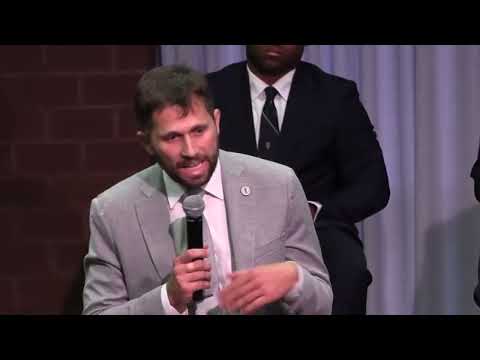
from Delmar, Mr. Mike Goldberg.
>> Good day.
>> Thank you, sir. And from Salisbury, Mr.
Joe Scafino.
>> How you doing?
>> Doing well.
>> Good.
>> Um doing better than some local
officials apparently, because there has
been uh a growing uh sense of acrimony
in the air. Um the fire service
agreements are something that anybody
who's watched county and city politics
over the years, I think can all agree
are often very um
intense and very highly charged, because
essentially it pits more often than not
the county versus the city or vice
versa, and the squabbling over the
payment for emergency services rendered.
Now, one of the things that has happened
as we've now gotten into the budget
season, is there's been a real um
concern at least emanating from the city
government uh through Mayor Taylor,
uh and particularly through uh City
Council President April Jackson, who
>> My name is April Jackson. I'm the
president of the Salisbury City Council.
We are practically begging you all to
help us with this fire service
agreement. It's about to cause us to
lose our union
because of the finances. We're digging
in reserve.
We serve 60% of the county.
And we're not being
given back
what we deserve.
And I think that it is
terrible
that our county executive
does not think enough
of our city
to give what is due.
Now, she states that she's given us more
than any other one. No, we don't want
more than any other county executive has
given us. We want what is owed to us.
We deserve it.
We serve the county and the city both.
So, could you please go over the budget
and make sure that we are taken care of,
making sure the city gets what is due to
them.
And every year we have gone through the
same thing to the point now where
we may lose the union. I don't want to
do that.
But, if that's what saves us and keeps
us from going bankrupt, then that's what
I have to do. But, also make sure it's
your responsibility to make sure that
this budget
is properly
obtained
and you go over it, make sure that
everything is addressed the way it
should be.
>> are their belief that the city is
essentially being taken advantage of
with regard to the fire service
agreement payments.
Um, the county has a different
perspective and we have numbers that can
sort of contextualize the essence of
this debate.
Uh, but I do think I think we all would
agree
that
the way that it's already taken shape as
we get into budget season
and the concerns that people have
because it involves fire and EMS it it
it sort of makes this discussion even
more uh, heightened.
>> Good evening.
>> My name is Sue Jackson Stein and
contrary to pop- popular belief,
transparency is not a four-letter word.
It means being honest, trustworthy,
decisions are cleared, well considered
and debated in the county.
Policies should be considered by the
county council
and ex-
explanations given to the constituents,
the taxpayers.
Decisions made by the executive often
appear to be made in secret
by fiat or hidden machinations.
This has made me suspicious of the
executive's dealings and policies.
It is incumbent that the county
executive be transparent
at least until her term ends in
November.
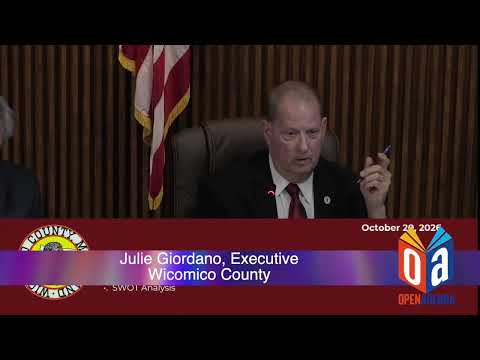
>> It's going to evoke some emotions, but
we shouldn't let the emotions overshadow
the fact. One slight correction, I know
it was it was a comment that was made at
the podium about uh you know, the count
the county gave 3.7 million to Salisbury
Fire Department last year and you know,
now we've cut them to
uh a little over two.
Um but I think it there's a bit of a
clarification there. We actually
approved what was it? Two 2.2 maybe?
And that's what that was actually what
was approved. The extra amount the extra
amount the extra 1.5
was an addition that we agreed to give
for prior years. So it wasn't as if that
was a you know, we had agreed to a total
of 3.7 last year. No, the amount for
last year was a just bit over 2 million.
Uh that's I think that's important to
clarify cuz this is not the first time
I've had heard someone make that
comment.
>> You can look at the finances, you know,
from from from different points of view.
You got to be careful with it because
you know, that old adage about figures
don't lie, but liars can figure. So we
got to
be sure that these numbers are right and
are
adequately explained to the public so
that they understand it.
>> Mhm.
And with us
to maybe help us expand those numbers
and to get perspective um is an old
friend Jim Adkins uh and I'd like to
bring him on the show because Jim has a
unique set of experiences. He's resident
of the Westside from Mardela and he's
also a lifetime member of a local
volunteer fire company. And between that
county experience and your number
crunching and at and
>> In the city.
>> in analysis of the never-ending drama of
what goes on in the city of Salisbury,
um I I think it would help the public
get a really good balanced perspective
as to both county and city perspectives
and maybe to hopefully come to an
understanding that this really isn't an
us versus them problem as much as it is
something of how do we move forward
together?
>> Right, it shouldn't be us versus them.
>> So, uh
if we could do this, Joe, if you could
stick around and then we'll bring Jim on
and Mike, if you can come back after the
fact after the fact and we will um
hopefully maybe get a better sense of uh
the county concerns through through uh
Jim's analysis and then I'd love to get
your take on those issues. So, stick
around and we'll be back for segment B
of Open Agenda.
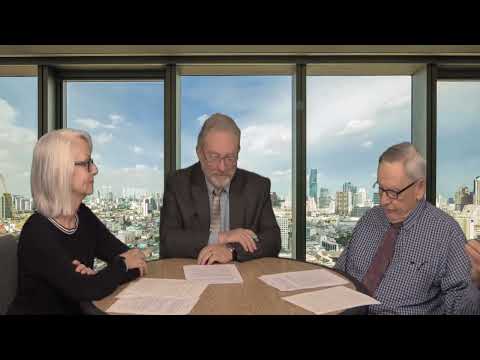
Hi, welcome back to Open Agenda. With us
in the house is Mr. Jim Atkins from
Mardela.
>> Thank you, sir. And sticking around with
us Mr. Joe Scafina from Salisbury.
>> Morning.
>> Thank you, sirs.
So, we have quite a bit to discuss in
the coming weeks, obviously, about the
budget in general, but even before some
of the more detailed analyses and issues
within the budget get discussed, one
thing that's popped up already is the
issue of the fire service agreement
between the city and the county. Uh
there's a lot of there's a lot of big
debate on this.
Um there is a lot of different uh
viewpoints and I would say, based on
what I've seen at both the city and
county council meetings, that there's
probably going to be some tough
conversations ahead about ultimately uh
how the budget breaks down with regard
to this fire service agreement. Um so,
it's my understanding, obviously, that
at this point um the executive submitted
the budget and there are concerns, at
least from the city of Salisbury side,
um um that they are not perhaps
receiving what they feel is is a fair
share uh for services rendered. Uh
there's obviously the view for many on
the county side that that's not true.
So, being that we've got somebody with a
county perspective and a city
perspective, as well as somebody who's
got pretty extensive experience in the
fire
service companies, uh we're we're kind
of in the ideal spot to talk about this.
So, so here's what I'd I'd like to do.
Um I'm going to talk to Joe Public of
Salisbury on this first, and then I'm
going to talk to Jim Public of the
county, and then we'll kind of see
uh if we can bridge this gap, or at
least get a sense of what we're actually
working with with these numbers.
Fair Fair enough? Sounds good. Okay, so
Mr. Scuff
from the city's perspective, what's
going on?
>> Our budget Our budget for the
uh fire services proposed is $15
million.
Approximately 1/3 of the fire
department's calls are county calls.
So, just based on that, back of the
envelope, they figured, "Look, we should
be reimbursed approximately $5 million
for servicing those 1/3 of the calls."
Um the the county budget
allocated
2.37
million
for 2027, which is barely half.
But the bottom line is 2.3 million
doesn't cover
our 1/3 expense.
Now,
the the
Uh Bob Taylor provided maps and and
stuff that he's provided to the
executive, he's provided to the council.
He gave it to me, you know, to use.
>> I'm sure he did.
>> Yeah.
So,
there's a chart, area and population
covered within 5 minutes of current fire
stations.
Salisbury's three fire stations
are
within 5 minutes of 75% of the
population of the county,
which is significant.
And Fruitland is 16%. So, if you took
all the volunteer ones,
they're only
within 5 minutes of 8% of the county's
population. So, the city absolutely
carries uh significant load um of of the
fire calls.
>> So, and so that's the basis of the
disagreement is the city from that from
that perspective, the city is carrying
the bulk of the service calls and is not
getting adequately compensated for those
calls. Correct. But just for
clarification, the negotiations are
usually per year
between the city and county. Is that
>> The last one they did uh
I thought was supposed to be a two or
three-year agreement. They they sat down
and actually in in 20
23
for fiscal year 2025, the city proposed
a budget to the county for 5 years.
>> Okay.
>> So,
if that is in fact where they operated
were one from 2025, 5 years would take
you to 2029.
So, you know.
>> Okay, so there's some discrepancy as to
what the agreement entails for us. Okay.
So, Joe, you've given the city
perspective or at least the the
perspective of city officials.
Uh Jim, where are you coming from on
this from the county perspective?
>> Well, I'm coming from it that that you
can take numbers and you can make them
say whatever you want to say.
I am not by any means degrading or
talking down about the Salisbury City
Fire Department. I think they've got an
excellent chief and I think they do an
excellent job.
But the last agreement
that was done last year stated that the
three stations in Salisbury would
receive the same allocation as the 11
volunteer fire companies in the county.
And that's what they have received.
Now, this year they're they're they're
looking for a substantial increase. And
if you look at the numbers and and you
can talk about the percent of the
population that they serve, well,
they're in a metropolitan area versus a
county area.
So, your population is going to be
bigger.
The
thing that everybody has to look at is
there are so many hidden costs involved
in a fire operation that that that
people don't see.
Uh, you have to have the equipment to
serve your community.
Whether you have 100 fires a year
or whether you have 1,000 fires a year,
you have to have X amount of equipment.
The city of Salisbury needs three fire
stations to serve the incorporated
limits of Salisbury.
It needs six ambulances.
And it needs a certain number of
engines.
And they do have one tanker
to serve the city of Salisbury.
If they never left
the city of Salisbury city limits,
they would need the same amount of
equipment
to handle what they have in Salisbury.
So, you're not going to reduce the cost
if you say, all right, let's put another
fire station on the west side of the
county, let's put another fire station
on the east side of the county. You're
not going to reduce Salisbury's costs.
They've got a a pretty much a built-in
expense.
So, you have to start looking at all the
incidental expenses.
And one of the biggest incidental
expenses
that comes to my attention
is emergency services,
which is a 911 center.
The 911 center handles all the 911 calls
for the county and city.
For the next 5 years, the 911 center has
a $33 million
budget for the next 5 years, which
includes a $22 million
new facility.
No expense to the city at all.
So, you know, if you want to say that
the city's responding to X amount of
percentages of calls in the county,
but they're not paying for the
personnel, the equipment, the building,
and everything that the 911 center
needs. So, if you're going to say, for
an example,
the city's handling
we'll just use a third of the calls,
so they should get a third of their
funding.
Well, then
on this hand, should they pay a third of
the expense of the 911 center?
>> Well, I'll counter that by saying the
city residents are double taxed. We're
paying city property taxes for those
services, and we're also paying county
property tax.
>> Yes, you are.
>> Which should
you know,
>> But you you you're also getting
county fire services in the in the city
because when Salisbury has a structure
fire,
you're getting a county company coming
in the city limits to help with that
fire.
>> Okay.
>> You're getting the sheriff's department
working in the city of Salisbury to
supplement and aid the city of Salisbury
fire or police department. So, the
county's paying for the sheriff's
department. They're coming in the city
to help the city. So, I'm not saying
that there should not be some type of
disparity or maybe a 10% reduction in
taxes or something for city, but I'm not
going to sit here and listen to the
argument that you're being double taxed
and you're not getting anything for it
because you are.
>> Oh, I'm not saying I'm I would never say
we're not getting anything for it. What
I'm saying is we should be compensated
fairly for what we provide to the
county.
>> Could I throw something out?
>> Sure.
>> Do you think down the road structurally
some of this would have been resolved if
we were to have either a tax
differential or a tax rebate system in
place? Would this mitigate some of the
tension between the county and city or
or is it something that always has to be
done in this way of annual or or
multi-year negotiations?
>> Well, I don't I don't fully understand
and of course I'm not involved in city
politics like like like Joe is, but
the state is in a financial bind.
>> Yep.
>> The county is in a
semi-financial bind. I mean, the county
has money and can do things. The city
apparently is in a financial bind. So
now all of a sudden
somebody somebody has to help the city
out. Now now my thing with that is how
did city get in this bind?
Is it by giving property away to
developers?
>> Or prior administrations.
>> And then then the developers sell the
property back to the city at a large
increase in profit and now you know, it
it
it is caused by a problem and and
getting back to the fire service
agreement, people in my opinion other
than politicians
need to sit down and figure this out.
Because politicians have a little bit of
their own best interest in it. But if
you get Chief Frampton
some other some other people, a
committee and figure out what we're
going to do with with the fire service
because you know, you still have some
hard feelings from several years ago
when the volunteers from station one
over on Biggleton Park Drive
left the city fire department
and wanted to start their own fire
department. Well, another volunteer and
make the 12th volunteer company in the
county.
They had a man manpower.
They went out and bought equipment. They
had ambulances. They had engines.
The only thing they didn't have to be a
fire department
was they didn't have any territory.
They had no territory to serve.
Because
the city of Salisbury and the Salisbury
fire department
would not give up
the unincorporated territory that that
volunteer station could have taken.
So, you know, yes, the city needs more
money for the fire department, but they
could have gotten rid of some some of
their territory along the way.
>> Well, you made one good point which I
agree with.
>> Well, thank you.
>> chiefs
should sit down.
>> Yes.
>> Chief Graham, whatever and and
>> And they do.
>> They can come up with a number and
that's the number I think
you know, so and I don't know where
where
No, no.
No, and
I don't think the the mayor is trying to
balance our budget on the back of just
the fire company.
>> No.
>> All right. And and you brought up from
you know, prior administrations gave
away the city's lost millions over the
years from tax differential tax rebates
abatements to developers, um waving
sewer and water hookup fees. So, and
again, so the the current administration
is trying to
get things back on track and it's it's
not going to be easy and he's got to
make some tough decisions.
>> Well, you do. It's not going to be easy
and tough decisions have to be made, but
you're also not going to flip the switch
in one or two years. This can't happen
in one or two years and you're not going
to fix it in one or two.
>> You're right. As you said, there's a
history here.
There is a long set of experiences about
how the county and city operate with
each other. And let's be honest, there's
a lot of personalities involved because
these are people's livelihoods and
territory. And look, emergency services
is a very territorial business just in
terms of how it operates. And so, this
complicates these discussions.
>> Well, and the other the other point
about the funding for the volunteer fire
companies. The funding that the county
gives volunteer fire companies
is not to allow them to exist
and operate.
It's to supplement
the income that they make from
>> fundraisers
>> fundraisers,
fund drives, all these other things.
It's a supplemental allotment.
Where you get into this, this is a
supplemental allotment to the city fire
departments.
So, what you're really talking when you
go talking about
50% of the funding should go to
Salisbury or that, you're now in an
operating budget. You're not in a
supplemental budget. You're now
operating the city fire department. And
that wasn't the initial intent.
There's a lot that needs to be fixed,
but
the right people need to sit down and
talk about it and come to agreement. And
the wrong time to do it
is at budget season.
And the city administrator 2 years ago
sat there in the council chambers and
threatened the council
>> I remember this.
>> that if they did not fund X amount of
dollars, the city of Salisbury would not
respond outside of city limits.
>> And that was right before an election.
>> Right before the election. And now the
rumor is going around that the same
thing is being said again that the city
of Salisbury will not respond. Well, I'm
sorry. The city of Salisbury has fire
territory.
If
the city thinks that it is inundated
with lawsuits now
from developers over whether or not they
can take a parking lot and make a
townhouses and all out of it.
Let them Let them say
that their territory
they're not going to leave the city
limits even though this is their
territory in the county. Let them say
they're not going to do that unless
something happened to a person or a
piece of property, and Salisbury won't
know what a lawsuit is.
>> Well, isn't this kind of the tragedy
with the whole debate is that in the end
we're talking about people's lives?
>> Yes, exactly.
>> And And that sometimes gets lost in the
um debate.
>> So, let's get the rhetoric out of this
about we're not going to do this if you
don't do that because we all know if
you're a firefighter
and another company calls and says we
need help
>> That's a brother, man.
>> They're coming. They're coming.
>> Yeah, and that's the thing. We're
talking about our neighbors and our
friends. We I don't look at you as just
a county guy or a city guy and that and
I think if we put Wicomico's interests
first, maybe we'll get to a resolution.
And to your point, maybe get the
politicians out of out of the debate.
Mr. Jim, thank you for coming in and
giving your perspective. Joe, would you
mind hanging around for a couple of
minutes?
>> Great door.
>> All right. We'll be back with the next
segment of Open Agenda.
Welcome back to Open Agenda. Back with
us from Delmar, Mr. Mike Goldberg.
>> Sir.
>> Hey, hey.
>> Thank you, sir. And sticking around, Mr.
Joe Skufca.
>> Yep.
>> So,
we had a really good and experienced
conversation about the complexities of
this topic. Obviously, it matters in a
way that people sometimes don't realize
because we're not talking about abstract
operations. We're talking about fire and
EMS services, right? We're talking about
real things that are life and death. Um
Mike, you you had an opportunity to to
listen to this
um back and forth with Joe and Jim.
What's your take on it as somebody from
Dunwoody?
>> Well, there there's two sides to the
story and it it really depends on what
which numbers you believe.
Um
you know, there there there seems to
If you look at it on the surface,
there seems to be quite a significant um
rolling back of the amount of funding
that the city is going to get. But, you
know, when you look at the fact that the
budget from 2026
was actually inflated because of
deferred payments that had to be that
had to be paid by the county to the
city, that inflated the number. You take
that out of the equation and both the
county uh volunteer fire departments and
the city uh fire department, they're
essentially they're being flat funded,
which is concerning because costs
continue to go up. Take a look at what
their fuel costs must be right now.
We're seeing some of the highest uh
gasoline and diesel prices we've seen
since the Obama years under the
circumstance.
>> Aren't there two other things though
that this whole debate or conversation
um includes that that
we're not maybe appreciating is that one
of the one of the things is that this
happens every few years, it seems that
right? That there is this back and forth
between the county and the city over
responsibility and rates, okay?
And I can't help but, you know, looking
at it from the outside, I can't help but
wonder why we don't do things in a more
open, transparent, systematic way rather
than what always seems to happen, which
is the county government, right, through
the executive's office and the city
government through the mayor's office,
always ends up having a kind of a back
room deal
to horse trade over a number that is
then going to be perpetually fought over
in the future. It just seems like not
only is it just bad policy, but it
actually is a public safety risk.
>> It's It's bad management. And let's face
it, politicians background isn't
necessarily in managing anything at all.
And I
take a look at the composition of, you
know, both executive branches, both
legislative branches. Not everybody
there has has a management background.
And good managers anticipate what the
conditions on the ground are going to be
in the near term and in the long term.
>> They failed to do that. So, we get down
down to the wire every time. And they
they wind up having to to duke it out
instead of, you know, planning in
advance.
>> And it creates a lot of ill will,
obviously, in the community.
>> Absolutely. I mean, the county and the
city financially not that wealthy. I
mean, Wicomico has the 18
out of 24 counties lowest income.
Salisbury's The Maryland poverty rate is
9 and 1/2%. Salisbury poverty rate is
24.3%.
So, you know, it's hard. We don't have
the tax base to carry
you know, the the the needs that, you
know, the services we need to provide.
Our tax base is is, you know, based on
on this poverty rate. It's It's
>> that makes these fights even more bitter
and and intense. The thing that's now
happening, and again, I don't want to
conflate the two issues, but it has been
brought up. I brought it up myself in
public comments and um
others have it as as well as, you know,
the city is in its own kind of self-made
crisis with this whole attempt to get
rid of collective bargaining,
particularly again from first
responders. And one of the things that
has been brought up is that
if this is being done supposedly because
the city's finances are in such bad
shape. I should say
the city's finances are in bad shape.
Uh but um using that as the excuse to
get rid of to get rid of collective
bargaining has been met with skepticism
by some of us. I think I think Jo- Jo-
Jo and I would agree, but but that's
been brought into the conversation, too,
because there is a hope among some that
if the city did have a better financial
footing that they wouldn't go the route
of taking over the collective
bargaining. Now again, that's a bigger
conversation, but that's happening at
the same time, and that goes back to
your point of why are we always going
down to the wire
at crisis point
where we have the politicians who are
now basically in an arms race.
>> I think the
the the biggest fear, I think, of the
administration, if I understand
correctly, is the binding arbitration
part of that collective bargaining
agreement.
The city's fear is that with binding
arbitration
they they they could be stuck with a
number that they can't afford.
So
in
my layman
uh thoughts is
maybe negotiate
the binding arbitration to become
non-binding arbitration. You can keep
everything else. I mean, look, the city
employees know the the finances.
You know, they know the city's not going
to be able to pay a 10% or an 8% raise.
And as long as we have transparency with
the budget, hey, look.
We can afford a 2 or 3% raise.
>> Mhm.
>> You know, that should
>> The the problem though with non-binding
arbitration is that it the next step is
litigation.
So
>> Possibly.
Possibly.
>> Yes.
>> Uh assuming that the the two parties
cannot come to an agreement, which is
from my experience, having been involved
in many arbitrations in the private
sector, that is very often the case.
Yeah, I I might like to see starting off
with mediation and then graduating to a
binding arbitration after that to keep
it the heck out of the courts. And this
is very common in the private sector to
to go that route and maybe that would be
a good fit for for this situation.
>> Well, gentlemen, this is a very
complicated issue. We're still, again,
to some extent at the beginning of the
budget season, so things are going to,
I'm sure, move and change. But I think
it's important that we try to educate
the public specifically on this one
aspect of the financial discussion
because it's going to be recurring in in
the coming weeks, it would seem, and it
certainly is becoming a more intense
topic of debate. So, um thank you for
your time
uh and we will see where it goes. And
thank you for joining us.
Have a wonderful week and we'll see you
on the next episode of Open Agenda.